
The Unspoken Dating App Hierarchy: When Gaming Preferences Shape Modern Romance
Explore how League of Legends and Dota 2 shape dating app success, revealing surprising biases and the power of gaming interests in modern romance.
As I scroll through endless profiles on my phone in 2026, I can't help but notice how our digital identities have become curated exhibitions of our passions. Yet, some hobbies seem to carry more social currency than others in this swipe-based economy of affection. My journey through modern dating apps revealed a peculiar hierarchy in the gaming world, where declaring allegiance to certain virtual battlefields can dramatically alter your romantic prospects. It's a landscape where pixels and profiles intersect, creating unexpected biases that feel as arbitrary as they are revealing.
The Great MOBA Divide on Tinder
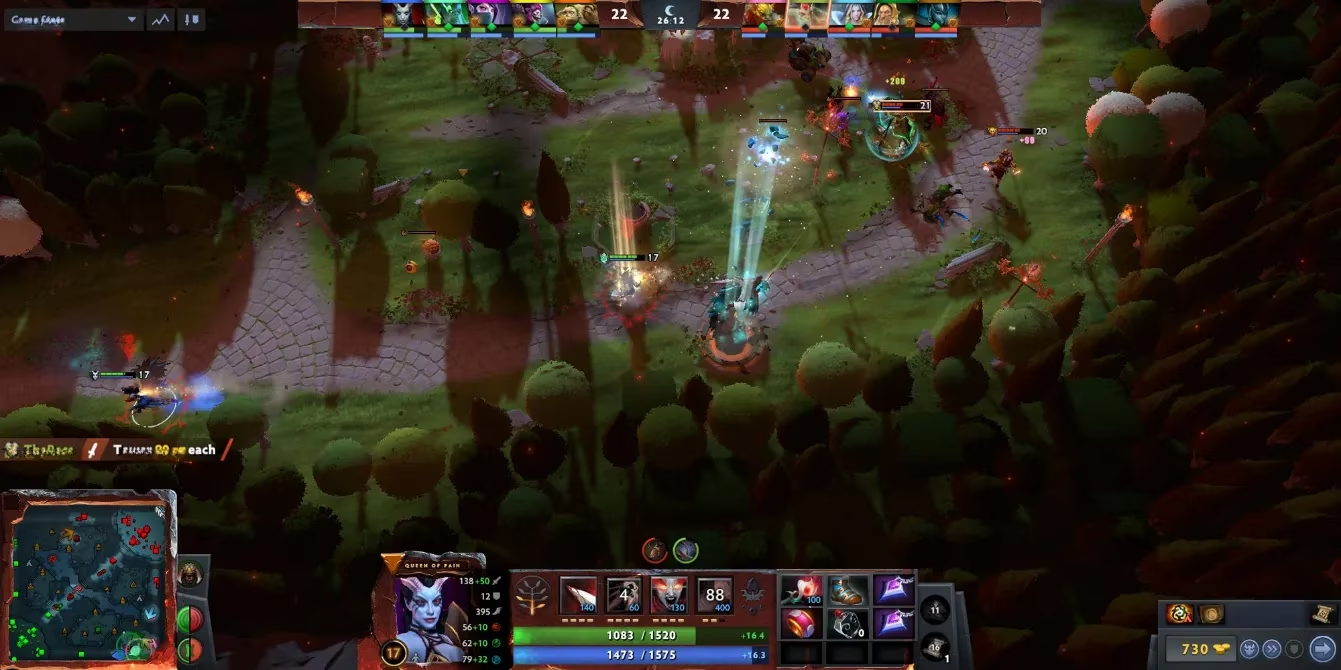
Discovering that League of Legends had earned an official 'interest' badge on Tinder while Dota 2 remained conspicuously absent felt like uncovering a hidden social algorithm. The platform's curation suggested that enjoying League was as socially acceptable as hiking or Netflix binges, while my preferred game existed in digital limbo. This wasn't just about gaming preferences—it was about what society deemed 'presentable' enough for the dating marketplace. The Dota 2 community's reaction was a mixture of amusement and resignation, with many joking that we were too engrossed in complex strategies and 60-minute matches to bother with something as trivial as romance. Our dedication was a double-edged sword, cutting us off from mainstream dating pools while binding us to our keyboards.
When 'Interests' Become Obstacles
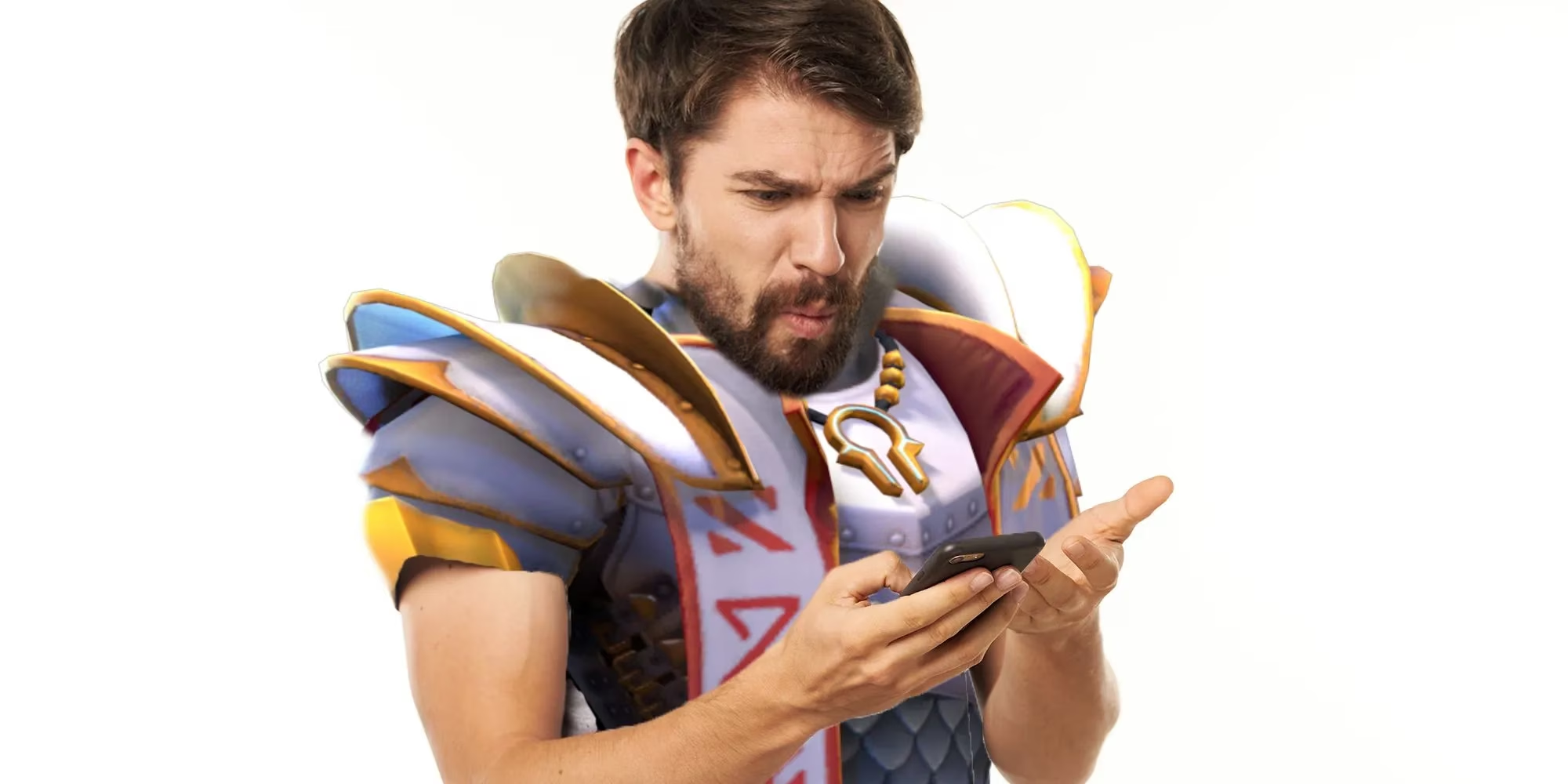
My curiosity led me to experiment, much like Nathan Edmonds did years earlier. Adding gaming credentials to my profile transformed my match rate into something resembling a ghost town after a sandstorm—initially promising but ultimately barren. The data was clear:
| Gaming Interest Added | Match Rate Change | Quality of Matches |
|---|---|---|
| League of Legends (Official) | Decreased 40% | Mostly other gamers |
| Dota 2 (Manual Bio) | Decreased 60% | Almost exclusively Dota players |
| No Gaming Mention | Baseline | Diverse but shallow connections |
What surprised me most wasn't the decrease in quantity, but the complete shift in demographic. My profile had become a beacon in a foggy harbor, only visible to those already navigating the same waters. Every match now began with discussions about lane strategies or tournament metas, as if my entire identity had been compressed into my gaming preferences.
The Psychology Behind the Swipe
Why does this happen? I've come to understand it through several lenses:
🔍 Stereotype Activation: Gaming still triggers specific stereotypes for many swipers
🎮 Niche Signaling: Listing specific games acts as a powerful filter, attracting only those within that subculture
⏰ Time Commitment Fears: MOBAs are perceived as time-consuming, suggesting less availability for relationships
My experience mirrored what researchers now call 'hyper-specific identity filtering'—where dating apps encourage us to present fragmented versions of ourselves, each fragment appealing to increasingly narrow audiences. My gaming passion, rather than being one facet of my personality, had become the entire prism through which potential matches viewed me.
The Unwritten Rules of Digital Self-Presentation
Through trial and error, I've developed strategies for navigating this landscape:
-
The Art of Selective Disclosure: Mention gaming in conversations, not profiles
-
Community First, App Second: Find potential partners within gaming communities themselves
-
Balance Your Digital Portfolio: Ensure gaming is one of several showcased interests
-
Emphasize Transferable Skills: Frame gaming as developing teamwork, strategy, or communication abilities
What began as frustration transformed into a sociological experiment. I realized that Tinder's omission of Dota 2 might have been accidental, but its effects were profoundly revealing about how we categorize people in the digital age. Our passions are no longer just hobbies—they're algorithmic ingredients in the recipe that determines our social and romantic opportunities.
Beyond the Swipe: Finding Connection in 2026
The most valuable lesson emerged unexpectedly. When I stopped treating my gaming passion as something to hide or highlight, and instead presented it as simply part of who I am, connections became more authentic. The matches decreased further, but the conversations deepened. I found myself explaining why I love Dota 2's complexity not as a defense, but as an invitation to understand what drives me.
Perhaps the true advantage isn't having your game listed as an official interest, but developing the confidence to present your authentic self—controller, keyboard, and all. In a world where our digital profiles are as carefully crafted as museum exhibits, sometimes the most revolutionary act is leaving a few exhibits uncurated, allowing others to discover the complete collection for themselves.