
Riot’s Touchscreen Patents Finally Reshape Wild Rift’s Battlefield in 2026
League of Legends: Wild Rift touchscreen innovations boost MOBA gameplay precision and user experience, transforming mobile competitive play.
In the autumn of 2026, Alex leaned against a café window, phone cradled in both hands, and queued for another ranked match in League of Legends: Wild Rift. The wind outside shook the last leaves from the trees, but his focus stayed locked on the champion select screen. Four years ago, he would have dreaded playing a marksman on a glass screen—every missed tap meant a lost trade, every sloppy ping a confused teammate. Today, though, his fingers moved with a confidence that felt almost telepathic. The difference lay in a quiet revolution that Riot Games had begun sketching out all the way back in early 2022, when a set of mysterious patent filings hinted at a future where touchscreens finally made sense for a MOBA.
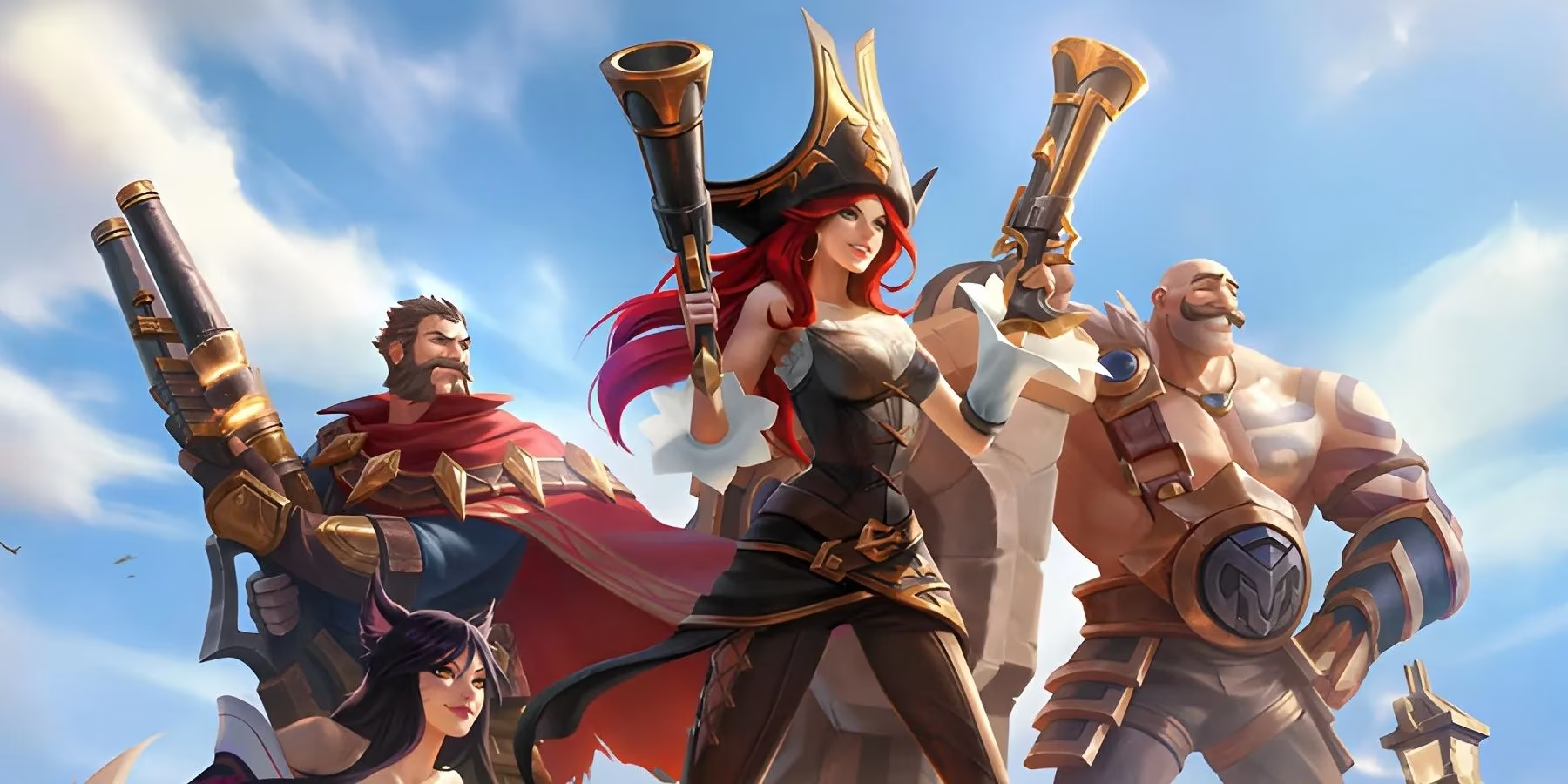
Those 2022 patents described contextual object pop-ups and gesture-based targeting systems that sounded almost too good to be true. At the time, Wild Rift had already won over millions of players, but the friction of tiny hitboxes and imprecise map markers never fully went away. The documents spoke of a “precision placement tool” for items and map markers, and a method that \u201cdisplay[s] a dynamic image or map on a touchscreen and receiv[es] a touch gesture thereon.” It was a promise wrapped in legal jargon\u2014one that stayed dormant through several patch cycles, through the long-awaited console launches, and through roster updates that brought champions like Zeri and Renata Glasc into the mobile fold. Players like Alex read the news with a shrug; patents were just patents, after all, and Riot had bigger fires to put out.
But behind closed doors, the user experience team in Los Angeles kept tinkering. Prototypes showed that a simple long-press on an ability icon could summon a radial wheel of smart-targeting options. A swipe upward from the minimap could place a danger ping directly on the nearest brush entrance instead of somewhere in the fog of war. The core insight was borrowing ideas from mobile gaming’s best tutorials—dynamic overlays that changed depending on what was happening on screen—and welding them to the split-second decision-making that League demanded. By 2024, a closed beta invited veteran players to test what Riot internally called \u201cFlow Targeting.\u201d The feedback was electric: combos that used to require pixel-perfect taps now flowed through gentle arcs, and the ping system evolved into a non-verbal language so fast that voice chat became almost optional.
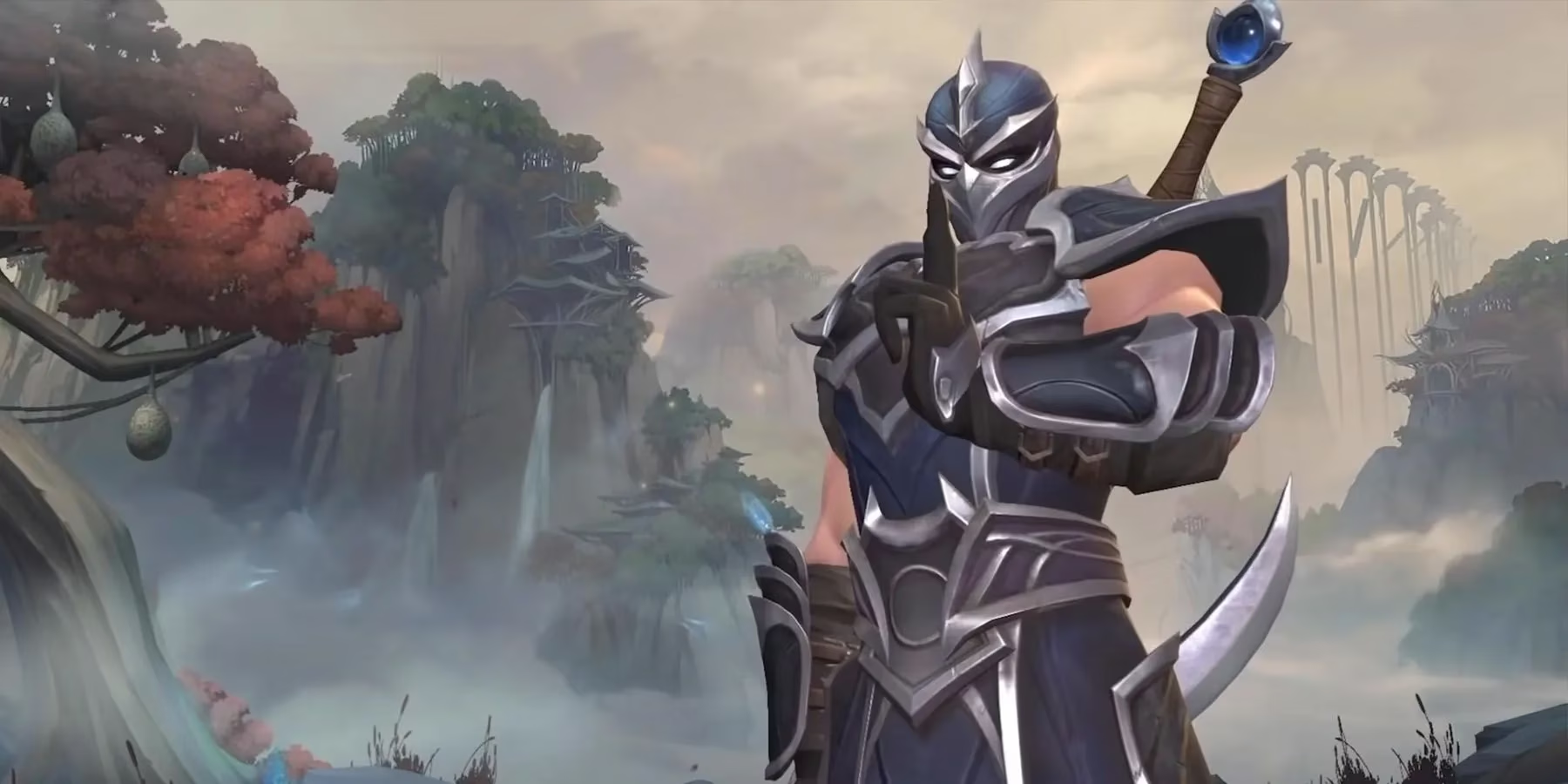
When the global rollout began in early 2026, the changes landed not as a single massive update, but as a series of subtle refinements that players could toggle on or off. The first thing Alex noticed was the new “snap targeting” cursor: while holding a skill shot, a semi-transparent overlay highlighted the nearest enemy champion, minion, or turret, and a slight tilt of the thumb nudged the priority. A swift pinch onto the map zoomed into a detailed local view, letting him drop a ward inside the exact pixel of a river bush without ever taking his eyes off his lane opponent. The precision placement tool existed now not just for items, but for every summoner spell and active trinket. Missed Ignites became a story old-timers told to newcomers who couldn\u2019t believe such a thing was ever possible.
What made these features stick was how they preserved skill expression. The system never auto-aimed; it offered intelligent guidance. A skilled player could still thread a Mystic Shot through a minion wave to hit a low-health target, but the interface now gave that player a brief visual cue—a ghostly arc—when the path was clear. Non-conversational communication blossomed into a symphony of contextual pings: tapping an ally\u2019s portrait and dragging to the dragon pit automatically sent an \u201cAssist me\u201d marker with a countdown timer for the objective\u2019s spawn. The chat log, once clogged with frantic duplicate pings, became a tidy scroll of precise intentions.
Esports also felt the shift. The 2026 Wild Rift World Championship showcased plays that would have looked impossible on a phone just two years earlier. Analysts praised the fidelity of mid-lane ward placements and the surgical timing of engage combos. Riot\u2019s gamble on patenting a better control scheme had paid off: the game finally felt native to glass, not a port squashed onto a smaller screen. The console version, which had arrived with its own controller optimizations, borrowed several of the touch-based innovations, creating a unified design language across platforms.
Looking back, Alex remembered the skepticism that surrounded those original 2022 patents. Gamers had seen countless tech promises fizzle, and Wild Rift\u2019s first years were filled with the usual mobile growing pains. But Riot\u2019s persistence\u2014fueled by player data, biomechanics studies, and sheer iteration\u2014turned a trio of patent diagrams into the most comfortable MOBA interface on any touch device. And as the sun set outside the café, Alex secured his third straight victory with a clean Ashe arrow that curved just enough to catch a fleeing Zed, guided not by luck, but by a gentle thumb slide and a decade of collective learning. The future of mobile competitive gaming had arrived, and it fit right in the palm of a hand.