
Rewinding Time with Ekko: How Convergence Redefines a League of Legends Champion
Convergence: A League of Legends Story delivers a thrilling, single-player platformer experience, spotlighting Ekko's time-bending powers in Zaun.
In the ever-expanding universe of League of Legends, Riot Forge continues its mission to pluck champions from the frenetic Fields of Justice and drop them into entirely new genres. Their latest offering, Convergence: A League of Legends Story, takes the time-bending prodigy Ekko and thrusts him into the grimy, vertical sprawl of Zaun for a single-player, 2D platforming adventure. This isn't just a reskin of familiar mechanics; it's a deep dive into the true potential of a character whose powers have, until now, been confined by the need for competitive balance. Forget last-hitting minions—here, Ekko's rewind ability becomes a narrative device, a puzzle-solving tool, and a window into the soul of a teenager who has never truly faced a consequence he couldn't undo.
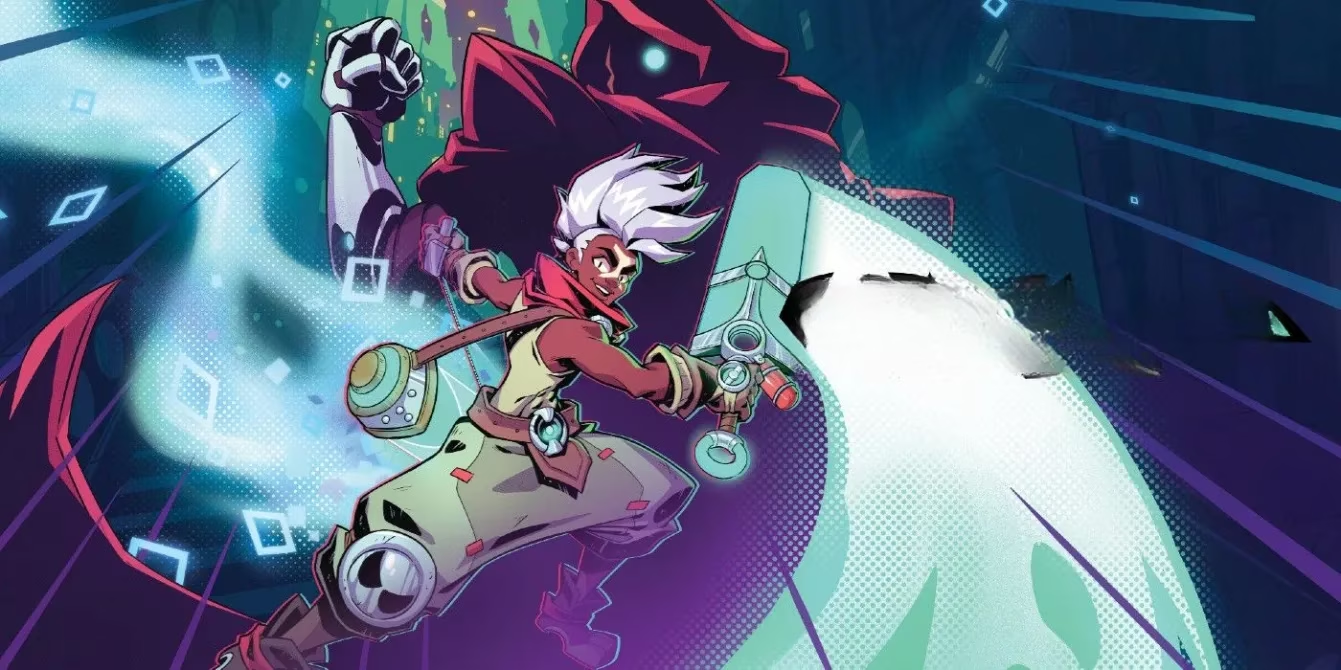
The creative process behind Convergence was a fascinating dance of collaboration. Riot Forge, acting as a boutique publisher, doesn't march into indie studios with a rigid blueprint. Instead, they start a conversation. For Convergence, they partnered with Double Stallion, a Montreal-based studio celebrated for its fluid 2D animation and tight action-platforming mechanics. The studio itself was captivated by Ekko's core fantasy. "They really liked the time rewind mechanic that he has, and they wanted to explore and play with that," explains Riot Forge's Creative Director, Rowan Parker. This mutual excitement sparked a creative wedding, where gameplay, narrative, and art began to intertwine organically around the young inventor from Zaun.
This freedom from PvP balance sheets is where the real magic happens. In a MOBA, Ekko's kit is a set of cooldowns and damage numbers. In Convergence, the team asked a different question: "What would he actually be able to do? Like, what's his actual power set?" The answer is a vastly expanded toolset. Players don't just use Ekko's Timewinder; they unlock a heap of variations for it, modifying and customizing his gadgets to build their own version of the champion. This process of translation and expansion allowed the developers to explore facets of Ekko's personality that the fast-paced MOBA simply can't accommodate. His inventive, defensive nature influenced his movement and combat style, making the gameplay feel like a true extension of his character.
Perhaps the most profound discovery came not from gameplay, but from narrative. Convergence uses its single-player format to tug at the emotional threads of a 16-year-old boy who can rewind time. "He's never really had to deal with consequences in life," Parker muses. "If you can just rewind everything, then you never have to learn... he's never fallen off the horse." The game's central challenge became presenting Ekko with situations he can't rewind away. It's a coming-of-age story wrapped in a platformer, forcing the protagonist to learn that some things in life must be overcome, not undone. This emotional depth is a luxury the competitive League of Legends could never afford.
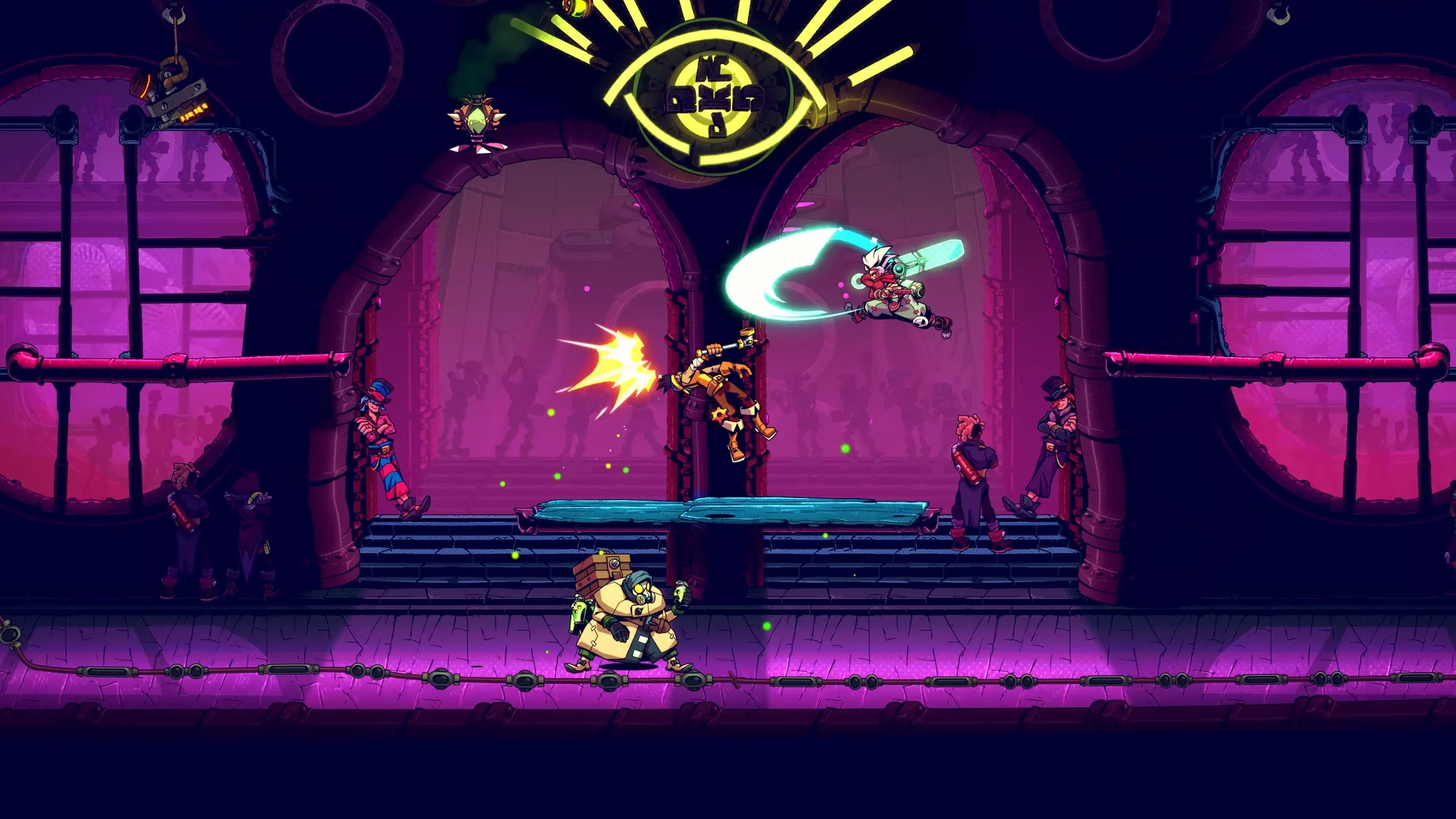
The world-building in Convergence has been a major hit with fans. Zaun, often seen in stunning concept art or glimpsed in other media, is finally a place players can truly inhabit. They can run through the grimy Entresol, navigate the toxic Sump, and explore previously unseen areas like floating theaters held aloft by balloons and gramophones. Parker highlights the delicate balance the team struck: showcasing iconic locations while inventing new ones that felt utterly authentic. The success is evident in the fact that many players can't distinguish what was pre-existing lore from what was crafted specifically for the game—a testament to the meticulous world-building by Riot Forge and Double Stallion.
Fans have also latched onto the new characters introduced as narrative foils for Ekko. One standout is Red, whose relationship with Ekko provides a nuanced look at teenage dynamics. Parker is careful not to label it a simple "love interest," noting that players enjoyed exploring how a time-rewinding boy would navigate the confusing, often non-reciprocal waters of adolescent connection. These characters act as mirrors, reflecting different facets of Ekko's personality and challenging him in ways his Z-Drive cannot fix.
So, what's the secret sauce that makes this spin-off resonate so strongly? According to Parker, it boils down to one word: authenticity. The team goes to extreme lengths to ensure every story beat, interaction, and environmental detail feels true to the champions players have known for over a decade. "We really have to live up to the expectation of fans of the characters first, before we're able to move the character forward," he states. This foundational trust is what allows them to then put Ekko through emotionally challenging, growth-inducing scenarios without breaking player belief.
The release of a free prequel comic further exemplifies this commitment to expanding the universe authentically. It features Ekko's gang, the Lost Children of Zaun, and lets his friends poke fun at his constant time-rewinding—"Maybe one day you won't be able to rewind time"—serving as clever foreshadowing for the game's themes. It's another canvas to explore relationships and the social implications of Ekko's power.
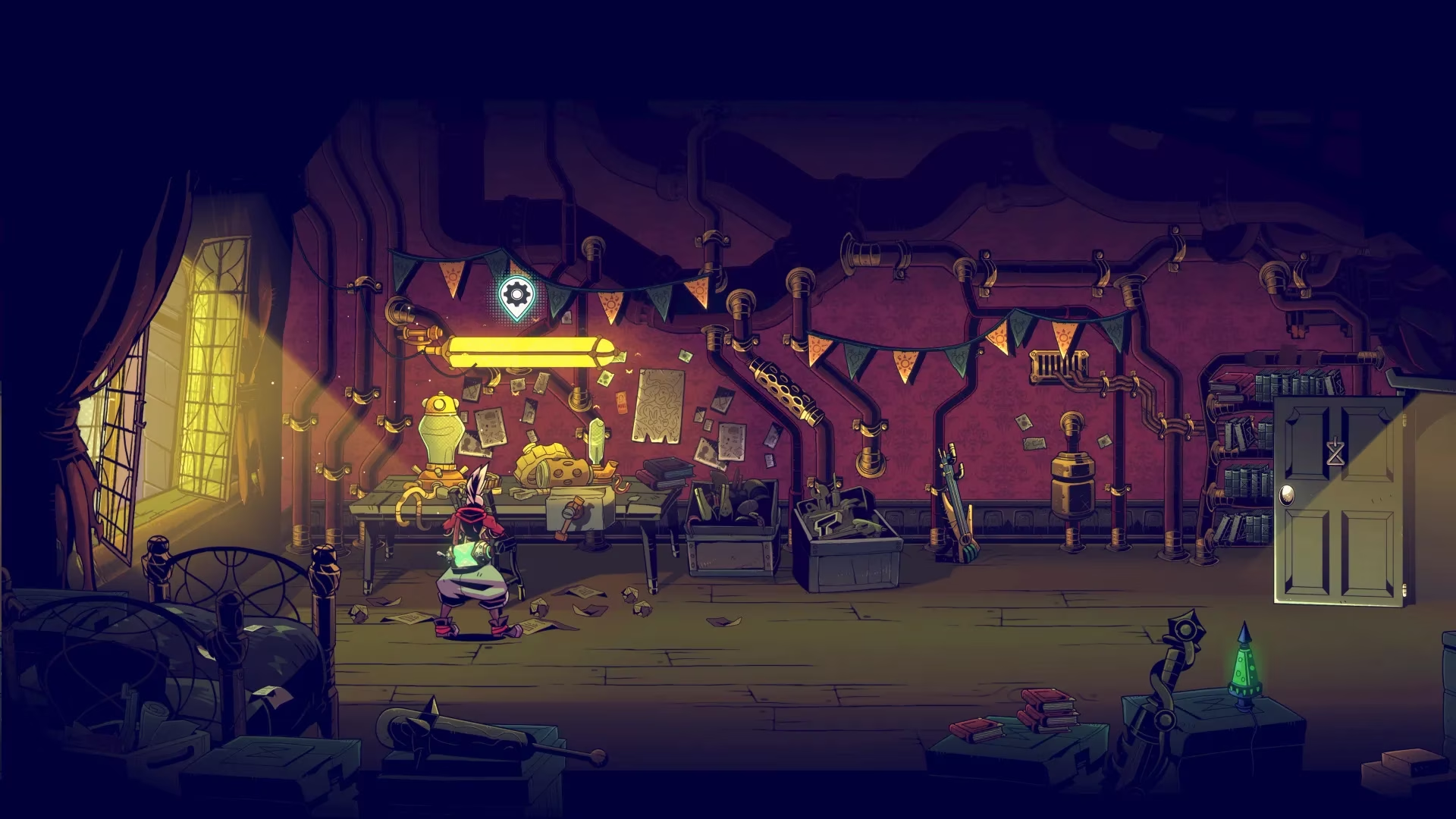
Looking at the bigger picture, Convergence represents a specific approach within Riot Forge's portfolio. Some games, like Ruined King, build directly on existing lore arcs. Others, like Convergence, are more self-contained, original stories that slot neatly into the timeline without disrupting major canon. While the official stance on canonicity is evolving as Riot works to unify its universe, the priority remains telling compelling, character-true stories.
And the stories aren't stopping. With Song of Nunu on the horizon, Riot Forge continues to showcase its genre diversity. Parker hints that this next adventure will be a much more "chill" experience (pun fully intended), proving that the studio's approach is driven by one core principle: choosing the genre best suited to shoulder the narrative weight of a champion's story. For Ekko, that meant a fast-paced, time-bending platformer set in the city that forged him. For others, the journey will be entirely different. One thing's for sure: in the hands of Riot Forge, the champions of Runeterra have never had more room to grow, stumble, and ultimately, redefine themselves.