
Reflections on Pixels and Principles: Navigating Controversy in a Virtual World
Explore the profound cultural and ethical gravity of League of Legends skins, as Riot Games' diversity journey reveals a compelling clash between virtual fashion and real-world convictions. This insightful analysis delves into the symbolic weight of digital aesthetics and corporate accountability.
I find myself contemplating the weight of digital aesthetics, the silent stories woven into the pixels of a champion's attire. How can a skin, a mere cosmetic layer in a game of strategy and skill, carry such profound cultural and ethical gravity? The report on Riot Games' diversity journey, a mirror held up to its corporate soul, reveals a landscape where virtual fashion collides with real-world convictions. An anonymous voice from within the studio echoes a sentiment I've felt in the quiet moments between matches: isn't there a contradiction in championing anti-brutality movements while simultaneously offering players the uniform of authority? The company, in its defense to the broader world, speaks of a global player base, a vast majority for whom the symbol of the police does not resonate with negativity. Yet, that single, concerned voice lingers, questioning the harmony between profit and principle. The memory of 2020's commendable donations to activist causes sits, for some, uneasily alongside the continued presence of these contentious digital garments. I wonder, do our virtual choices, even aesthetic ones, reflect our values, or are they simply fragments of a fantasy we momentarily inhabit?
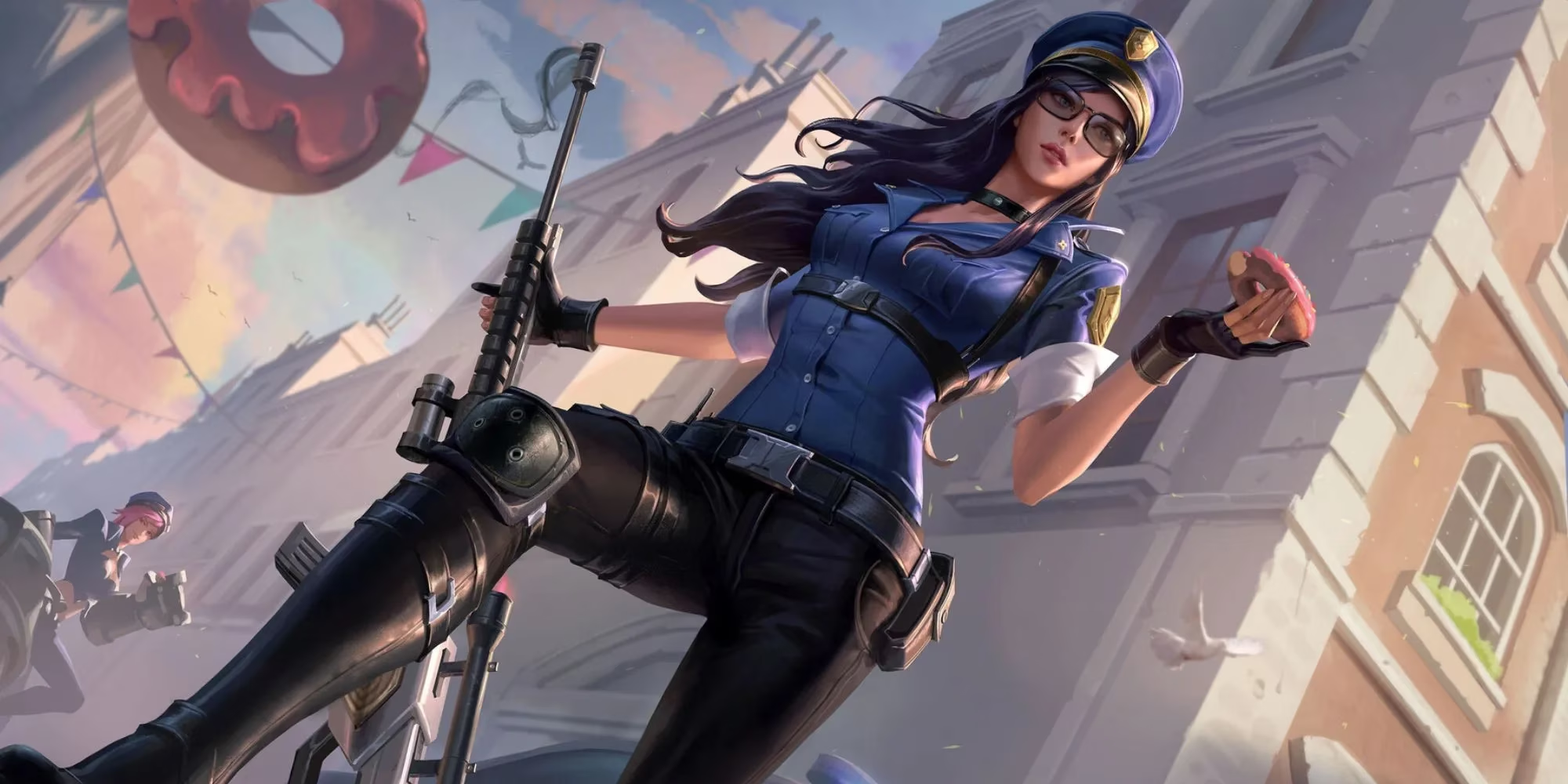
The Duality of Digital Symbols
As I reflect, it becomes clear that League of Legends is not an island in this sea of symbolic debate. The controversy touches other shores. Consider Overwatch and D.Va's officer skin, which once sparked its own firestorm. The design's resemblance to specific real-world uniforms ignited discussions far beyond gameplay, touching on geopolitical tensions and societal fractures. It serves as a potent reminder: in our interconnected world, a skin is never just a skin. It is a cultural artifact, interpreted through countless personal and collective lenses. Riot's spokesperson, Joe Hixson, offers a pragmatic counterpoint in the report, noting that these particular skins are largely not actively monetized and are legacy content, woven into the game's historical tapestry. But does longevity sanitize symbolism? Or does it merely deepen the roots of a potentially problematic image within the game's culture?
A Canvas of Progress and Reconciliation
Yet, to focus solely on the controversy would be to paint an incomplete picture. The very report that highlights these tensions is, paradoxically, a document of significant hope. It tells a story not of stagnation, but of arduous evolution. Since the dark clouds of the 'bro culture' allegations, the company has embarked on a journey of tangible change. The report itself acknowledges 'significant improvements' in workplace culture and hiring—a hard-won transformation. This narrative reached a profound milestone with the monumental $100 million settlement agreement for women impacted by the past environment. This isn't merely corporate PR; it is a substantial act of accountability, a financial and moral reckoning that speaks louder than any skin ever could. It makes me ponder: can an institution truly hold space for both internal reform and external symbolic friction? The path forward seems to be one of continuous negotiation, between the art of the game and the ethics of its creators.
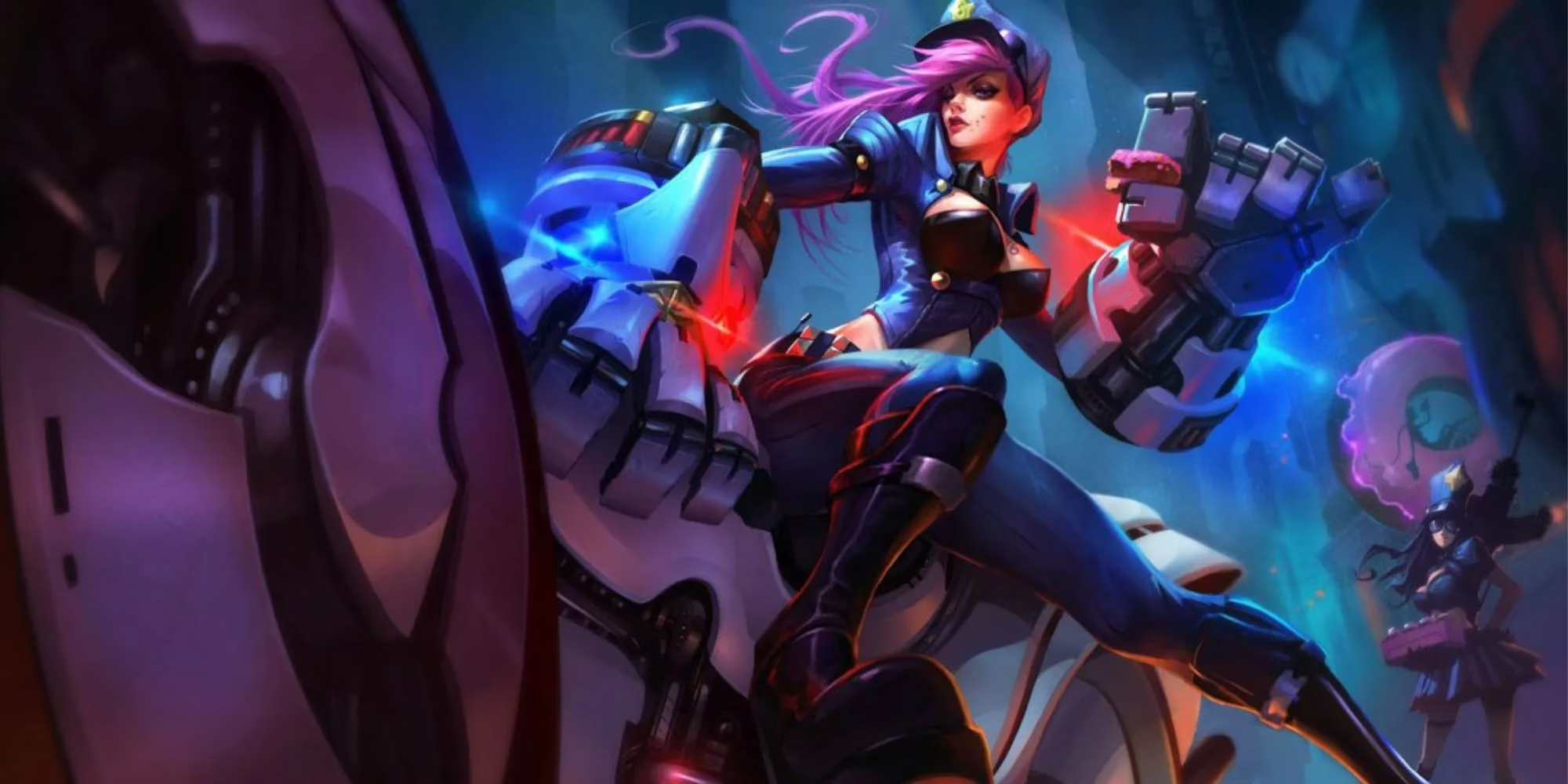
My Personal Lament: The Weight of Choice
As a player, I am left in a thoughtful silence. The game is my escape, a realm of calculated chaos and glorious victory. Yet, it is also a social space, a piece of modern culture. When I scroll through the skin selection for Caitlyn or Vi, I am no longer just considering a visual effect; I am confronting a microcosm of a much larger dialogue. Do I separate the art from the context? Can I? The company's stance is one of broad, global appeal, but my experience is personal and rooted in my own context. The anonymous worker's worry about profiting from certain imagery resonates with a part of me that believes our entertainment should strive to be conscientious. At the same time, the documented progress in workplace equity offers a different kind of hope—one grounded in actionable change rather than aesthetic removal. Perhaps the true test isn't in the deletion of old content, but in the conscious creation of the new. What stories will the skins of 2026 tell? Will they reflect a more nuanced, inclusive, and thoughtful world?
A Table of Contrasts: Then, Now, and Tomorrow
To visualize this journey, let's consider the key points side by side:
| Aspect | The Past (Pre-2020s) | The Present (2026) | The Hopeful Future |
|---|---|---|---|
| Workplace Culture | Allegations of toxic 'bro culture' 😞 | Recognized 'significant improvements' & a $100M settlement 👏 | Sustained equity and inclusive leadership 🚀 |
| Content Symbolism | Unquestioned inclusion of authority-themed skins 🎮 | Active debate & defense of legacy cosmetic items 💬 | More culturally sensitive & collaborative design processes 🌍 |
| Player Perception | Largely aesthetic-focused | Growing awareness of socio-political context 🤔 | Empowered, thoughtful engagement with game lore & cosmetics ✨ |
| Corporate Action | Reactive | Proactive in diversity reports & legal settlements ⚖️ | Holistic integration of ethics into all creative pipelines ✅ |
Final Musings from the Rift
In the end, I am both a critic and a fan. The controversy over the police skins is a symptom of a game—and an industry—maturing. It is a sign that players and developers alike are recognizing the power embedded in these digital worlds. The journey of Riot Games, as laid bare in this report, is not a simple one. It is a tapestry woven with threads of contradiction, improvement, settlement, and ongoing debate. The $100 million settlement is a stark, powerful line in that story, a commitment to righting past wrongs that cannot be ignored. Yet, the quiet question about the skins remains, a subtle dissonance in an otherwise improving symphony. Perhaps that is the reality of progress in our complex age: it is rarely a straight line, but a winding path where financial accountability, cultural symbolism, and creative expression must learn to walk together. As I queue for my next match, I carry these thoughts with me, a little heavier, a little more aware that the world of Runeterra is, in its own way, a reflection of our own.
Is the true meta not just about champion picks, but about the values we choose to champion? 🤔