
Project L: The Free-to-Play Horizon Where Champions Clash
Project L, the free-to-play fighting game, emerges as a revolutionary skill-based contender, promising an accessible and respectful monetization model. The development update reveals a formidable roster, including the powerful new titan Illaoi, whose unique kit offers dynamic and devastating combat potential.
In the vibrant arena of competitive gaming, a new contender emerges from the forge of Riot Games, promising a future where the clash of champions is not gated by gold but by skill alone. Project L, the long-awaited fighting game incarnation of the League of Legends universe, has officially unfurled its banner as a free-to-play title, joining the vanguard of modern fighters like MultiVersus and Brawlhalla. This declaration, made by game director Tom Cannon in a 2026 development update, is a pledge woven from respect—a vow to honor both a player's dedication and their resources. "We want you to be able to play no matter where you live, what your skill level is, or how much money you have to spend on a game," Cannon affirmed, casting the game's philosophy as an open invitation to all. The monetization model, while following a familiar path, is promised to be a considerate companion on the journey, never a demanding tollkeeper.
The development forge burns brightly, with the core mechanics now cooling into their final, formidable shape. The team's focus has shifted, like a river changing its course, toward the sculpting of champions and the architecture of the world they will inhabit—competitive ladders and social hearths where rivalries and camaraderie will blossom. The glimpses offered are tantalizing echoes and new whispers: the familiar, chrono-kinetic dance of Ekko and the brutal, decisive strikes of Darius from last year's reveal are now joined by the chaotic spark of Jinx and the elusive, enchanting grace of Ahri, each frame a promise of diverse combat poetry.
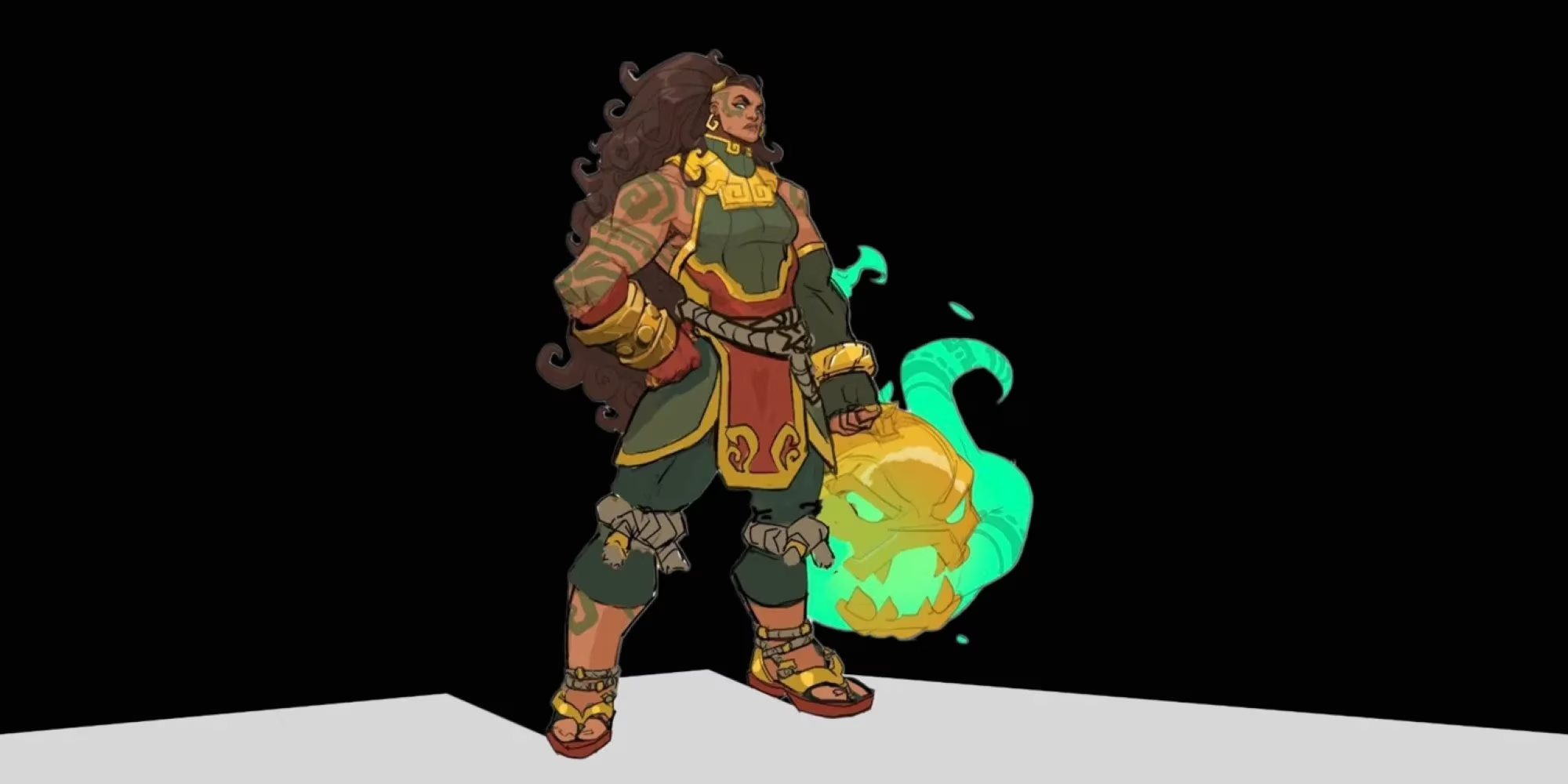
And then, there is a new titan stepping onto the stage. Illaoi, the Prophet of the Great Kraken, arrives as the fifth pillar of the starting roster, a seismic presence transplanted from the top lane of Summoner's Rift. For seven years, she has been a bastion of strength in League of Legends, and her translation into Project L loses none of her imposing grandeur. She is described as a "big body juggernaut," a force of nature whose combat style is an extension of her deep faith. Her weapon is a giant golden idol, an instrument as much for devotion as for devastation, capable of performing a spiritual vivisection—ripping the very essence from her foes like a fisherman hauling a soul from the depths of a forgotten sea.
Her kit is a symphony of controlled, monumental force:
-
The Idol's Wrath: Direct, powerful blows that serve as the foundation of her pressure, each swing carrying the weight of her conviction.
-
Tentacular Dominion: On successful strikes or well-timed blocks, ghostly tentacles erupt from the battlefield. These are not mere zoning tools but extensions of her will, coiling around the arena like the roots of a world-tree seeking anchor.
-
Combo Potential: The tentacles create a dynamic midfield dominion, setting the stage for devastating combinations. Riot emphasizes a deliberate design choice: the tentacles are to compliment her physical prowess, not define a mystical moveset. They are the kraken's grasp that sets up the idol's crushing finale, ensuring Illaoi remains a brawling powerhouse rather than a distant, trapping zoner.
This approach to her design highlights Project L's broader philosophy—accessibility married to depth. The free-to-play model opens the gates, while characters like Illaoi offer rich, strategic soil in which to grow. Her playstyle promises to be a unique blend of oppressive presence and setup, a character whose zone of control is alive and reactive. As the development continues, with no release date yet etched in stone, the community watches, its anticipation a low hum growing into a roar. Project L is not just building a game; it is cultivating an ecosystem where every fight is a story, and every champion, from the calculated Ekko to the primordial Illaoi, is a verse in an endless, epic poem of conflict.