
Mastering Taggart’s Drifloon Balloon Mini-Game in Pokémon Legends: Arceus
Pokémon Legends: Arceus' Request 26 is a balloon-popping mini-game that tests aim and timing. Burst Drifloon for combos and a 10,000-point target.
Long after the main story of Pokémon Legends: Arceus has been completed and the Hisui Pokédex filled, the vibrant village of Jubilife still hums with small, entertaining distractions. Among the many side requests scattered across the game, one stands out for its cheerful departure from standard fetch quests: Request 26, also known as Aim for the Big Leagues!. Instead of tracking down a rare creature or gathering obscure ingredients, this mission invites players into a fast-paced balloon-popping mini-game that tests aim, timing, and a touch of strategy. Even in 2026, years after the game’s launch, the simple joy of hurling Poké Balls at floating Drifloon targets keeps trainers coming back to the Practice Field.
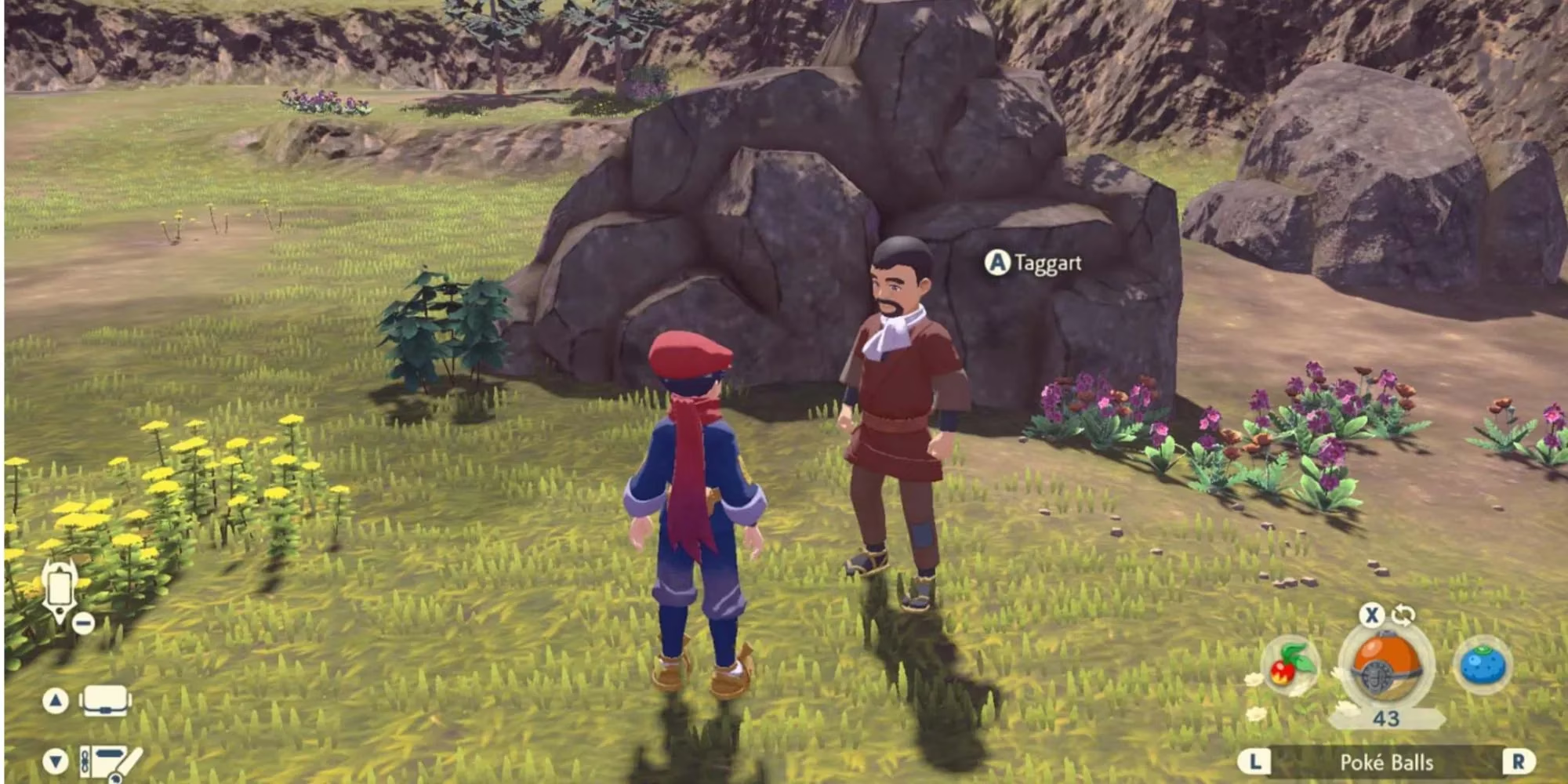
Unlocking the mini-game requires a little narrative progress. The request becomes available only after the player has spoken to Arezu outside Galaxy Team Headquarters during the mission Arezu’s Predicament. Once that conversation wraps up, a new request marker appears—Taggart, a spirited NPC standing on the bridge just across from the headquarters. His enthusiasm is contagious, and after a brief chat, he directs the player to the Practice Field in the southern outskirts of Jubilife Village, not far from the pier where every trainer’s journey first began.
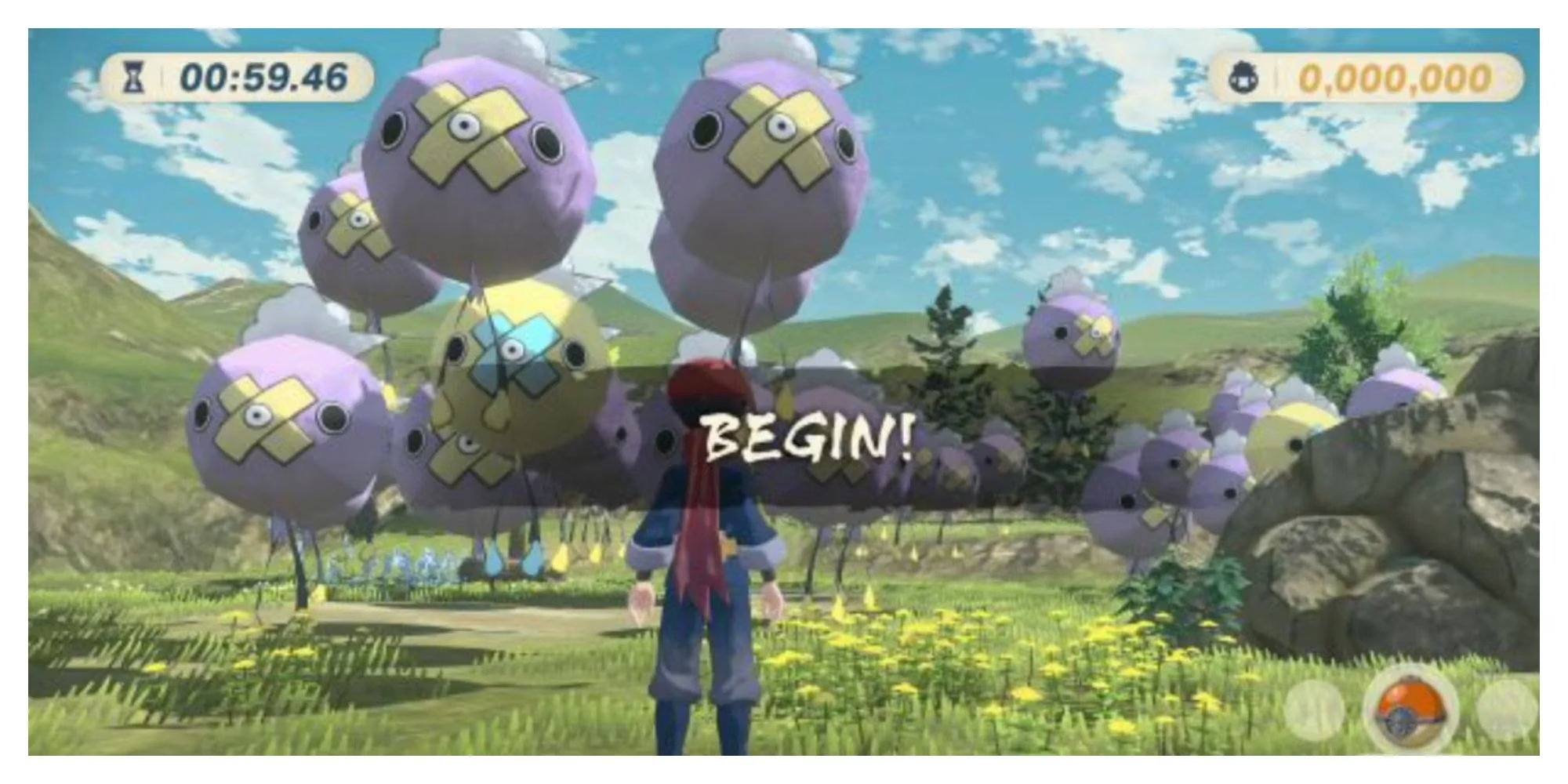
Stepping onto the field, the challenge unfolds immediately: score 10,000 points or more within a single minute by popping Drifloon balloons. Unlike standard wild encounters, there is no risk of losing Poké Balls from the inventory. Taggart supplies an endless stream of them for the event, meaning every throw can be made without hesitation or resource management. The balloons themselves come in two varieties—purple standard Drifloon worth 100 points each, and gleaming yellow bonus Drifloon that award 200 points. A steady parade of targets floats across the sky, ensuring there’s never a shortage of popping opportunities.
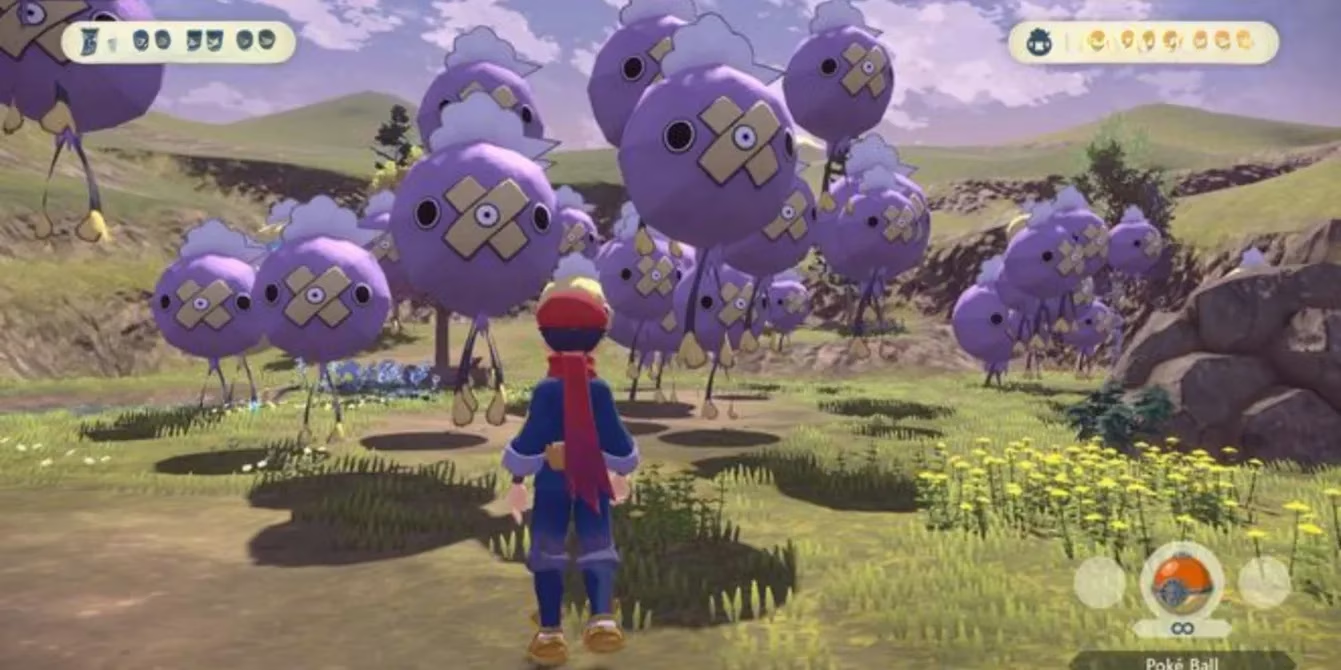
Scoring isn’t simply about rapid fire. The game rewards precision and clever positioning. Landing a single Poké Ball in a way that bursts multiple balloons at once triggers a combo bonus, adding a significant chunk of points and, more importantly, granting a time extension. Because the clock is always ticking, chaining multi-balloon pops is the key to consistently crossing the 10,000-point threshold. The throwing mechanic mirrors the game’s standard feel—each ball flies in a gentle arc rather than a straight line. Adjusting for distance and height becomes second nature after a few rounds, but newcomers are wise to treat their first attempts as a warm-up to learn the physics.
Several small strategies can turn a frantic minute into a relaxed victory:
-
🟡 Prioritize the yellow Drifloon. Since they offer double the points, they should always be the primary target, especially if they’re drifting alone in an open space.
-
🎯 Aim for clusters. Two or more balloons hanging close together are a golden opportunity. A well-placed throw can pop them all at once, earning both combo points and extra seconds on the timer.
-
🔄 Plan your throws in advance. Because the arc takes a moment to reach its target, lining up the next cluster while the current ball is in flight helps maintain a steady rhythm.
-
⚡ Don’t panic. The timer is generous enough that a few missed throws won’t doom the attempt. Calm, controlled shots that hit yellow or grouped balloons easily outpace rapid, inaccurate spam.
With even a moderate application of these tips, reaching 10,000 points feels more like a pleasant puzzle than a punishing grind.
Upon hitting the required score for the first time, Taggart congratulates the trainer and hands over a tangible reward: 15 Great Balls and a Nugget. The great balls are a practical boon for any aspiring researcher, while the nugget can be sold for a tidy sum at the village shop, feeding back into the broader economy of crafting and supplies. At that moment, Request 26 is officially marked as complete, adding another entry to the growing list of accomplished tasks.
Yet the mini-game doesn’t end with the request. Taggart remains permanently stationed at the Practice Field, and the balloon challenge stays open for repeat play at any time. This persistent replayability is where the feature truly shines. By returning to beat personal bests, players can earn a rotating assortment of additional prizes that scale with their score. While the base rewards of Great Balls and a Nugget are guaranteed on that first clear, subsequent high scores can yield Sticky Globs, Wing Balls, Stardust, more Nuggets, and even rare Ultra Balls. The exact thresholds aren’t spelled out in-game, but the general pattern is clear: the higher the final tally, the better the loot.
This looping reward structure transforms a simple mini-game into a worthwhile repeat activity. Sticky Globs and Ultra Balls are especially valuable for catching elusive Alpha Pokémon and Legendaries in the field, giving the balloon challenge a subtle connection to the broader exploration loop. Rather than feeling like a throwaway gimmick, Taggart’s challenge becomes an efficient—and genuinely fun—way to stock up on high-tier items without trekking through the wilderness.
From a design perspective, Request 26 exemplifies the charm of Pokémon Legends: Arceus’ optional content. The original 2022 release packed its Hisui region with hundreds of tasks, but few allowed players to engage in a pure mechanical skill test divorced from the usual Pokémon battle system. The Drifloon mini-game uses mechanics players already understand—the arc throw of a Poké Ball—but repurposes them into a light, arcade-like experience. The cheerful balloon designs, the upbeat village backdrop, and Taggart’s unshakable enthusiasm combine to create a small pocket of joy that holds up remarkably well even years later.
In the current gaming landscape of 2026, where nostalgia for early Switch-era classics runs deep, returning to Jubilife Village and spending a few minutes popping balloons feels like visiting an old friend. Newer titles may offer flashier graphics or more complex side activities, but the straightforward satisfaction of a perfectly timed multi-balloon burst remains undiminished. For trainers still wandering Hisui or picking up the game for the first time on a dusty cartridge, mastering Taggart’s Aim for the Big Leagues! is a delightful diversion—and a reminder that sometimes the best rewards come wrapped in the simplest of pleasures.