
League of Legends in 2026: Still Huge, Still Chaotic, Still Eating My Free Time
League of Legends isn't dead: Riot's ecosystem hit 180M monthly active users in 2021, proving the 2009 titan still dominates.
I have a confession to make: every time someone asks me if League of Legends is dead, I hear a tiny Teemo laugh somewhere in the back of my brain. Is the game old? Sure. It launched back in October 2009, which means it is old enough to have its own nostalgia playlist. Is it fading into obscurity? Absolutely not. If anything, the whole League universe is still a very loud, very profitable, very patch-note-shaped monster. And yes, I am biased, but the numbers are not exactly shy either.
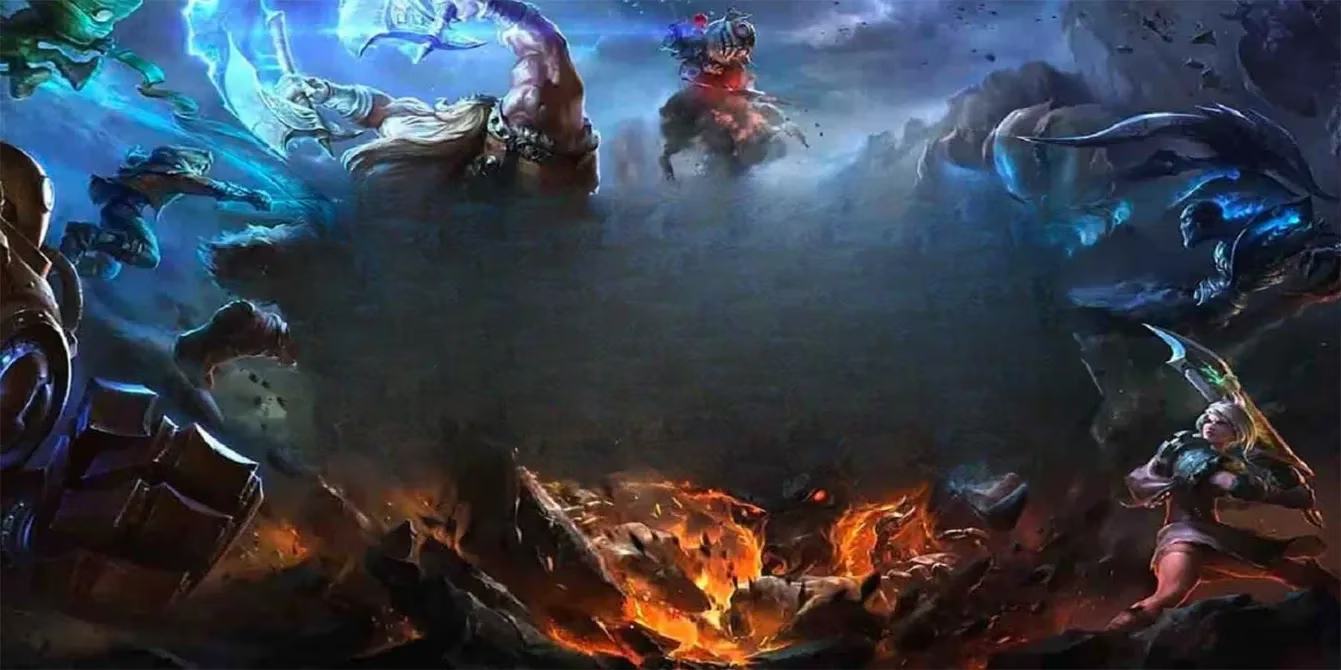
The big flex comes from Riot Games' ecosystem. The original League of Legends plus League of Legends: Wild Rift, Legends of Runeterra, Teamfight Tactics, and Fight for the Golden Spatula reportedly reached 180 million monthly active users in October. That figure is from Riot's 2021 disclosure, so in 2026 I treat it as a historical benchmark rather than a live counter. Still, let that sink in. A 2009 free-to-play PC game, its mobile sibling, a card game, an autobattler, and a mobile party game together posted a number that makes a lot of entertainment companies sweat through their branded hoodies. Valve's Steam was estimated at around 120 million active users at the time. Steam has a gargantuan catalog; Riot had five League titles in this comparison. Five. I own more unopened indie games than that, and I still cannot explain how Riot made this work.
Now, before someone in the comments sharpens a pitchfork, let us read the fine print. Riot defines monthly active users as players who accessed a game during the calendar month, and a player who accesses two games counts as two users. So yes, the number is somewhat inflated. Is it meaningless? No. Most people are not grinding all five League titles every single month like a full-time multiverse intern. The overlap is real, but it is not so huge that the 180 million figure becomes a magic trick. Wild Rift also deserves a shout-out here: it is basically a low-fat mobile version of the main game, it rolled out to many parts of the world in October 2020, and it arrived in China on October 8, 2021. That is a recipe for reach, especially in markets where sitting at a PC for forty minutes is less convenient than playing on a phone while pretending to listen to a meeting.
And what about Valorant? Its 14 million monthly active users were not even included in the 180 million League figure. I know, I know: comparing player counts across genres is like comparing apples to extremely competitive tactical oranges. But it does show that Riot is not a one-trick poro. The company has a habit of building games that people love, hate, love to hate, and then queue for again at 1 a.m. Am I speaking from experience? I refuse to answer on the grounds that my ranked history might incriminate me.
| Piece of the League universe | Why it matters |
|---|---|
| League of Legends on PC | The original free-to-play titan, still updated with new content, buffs, and nerfs |
| League of Legends: Wild Rift | The mobile-friendly version that widened the audience, especially after its 2020 rollout and 2021 China launch |
| Teamfight Tactics | The autobattler that turns team composition into a spreadsheet with emotions |
| Legends of Runeterra | The card game that lets me lose in a completely different format |
| Fight for the Golden Spatula | Another mobile piece of the broader Runeterra party |
The original League of Legends has not been left in a museum either. Riot keeps patching it with new content, buffs, and nerfs. Ah, buffs and nerfs: the eternal cycle of me reading patch notes, nodding wisely, and then immediately building the wrong item. Nothing says 'healthy live game' like a community that argues about a two-damage change for three days straight. Is that annoying? Sometimes. Is it also proof that people still care? Absolutely. A dead game does not generate seventeen-page forum threads about a jungle camp respawn timer. A dead game generates silence, and League has never been good at silence.
In 2026, the context is a little different. Arcane has already made its mark on Netflix and pulled in viewers who had never last-hit a minion in their lives. Wild Rift keeps the mobile door open. Teamfight Tactics gives people like me a way to feel strategic without admitting that I cannot land a skillshot. The broader League universe is less a single game and more a small, noisy ecosystem. That is exactly why the old 180 million benchmark still matters: it showed the ceiling was not a ceiling at all. It was a signpost.
Should Valve panic? Probably not. Steam is a supermarket with thousands of products; Riot is a very successful restaurant chain with a focused menu. The only direct competitor on that menu is Dota 2, and even that comparison is more of a spicy family feud than a total war. Riot's lineup is relatively limited, and that focus is part of the strategy. Steam can sell you a farming simulator, a visual novel, and a game about being a goat. Riot wants you inside its universe, wearing its cosmetic skin, watching its animated series, and arguing about its patch notes. Honestly? It works.
So here is my deeply scientific 2026 conclusion: League of Legends is not dead. It is not even politely resting. It is a free PC game that keeps reinventing its own ecosystem, counting players across multiple titles, and making me question my life choices every time I queue up. Is that healthy? Debatable. Is it impressive? Very. And will I keep playing? Unfortunately, yes. Someone has to keep the Teemo laughter alive.