
Ionia's Hidden Lore: From First Lands to Dark Secrets
Ionia's lore in League of Legends: a tranquil land shattered by Noxus, birthing iconic champions Irelia, Zed, and Karma.
I've been playing League of Legends since the beta, and I still get chills every time I think about Ionia. On the surface, it's this breathtaking archipelago of cherry blossoms and tranquil monasteries, but dig a little deeper and you'll find a land where the spirit realm bleeds into reality, where a 14-year-old humiliated a legendary general, and where the local arms dealer might be funding a serial killer. Seriously, this region is a beautiful mess, and I'm here to walk you through the juiciest parts of its lore.
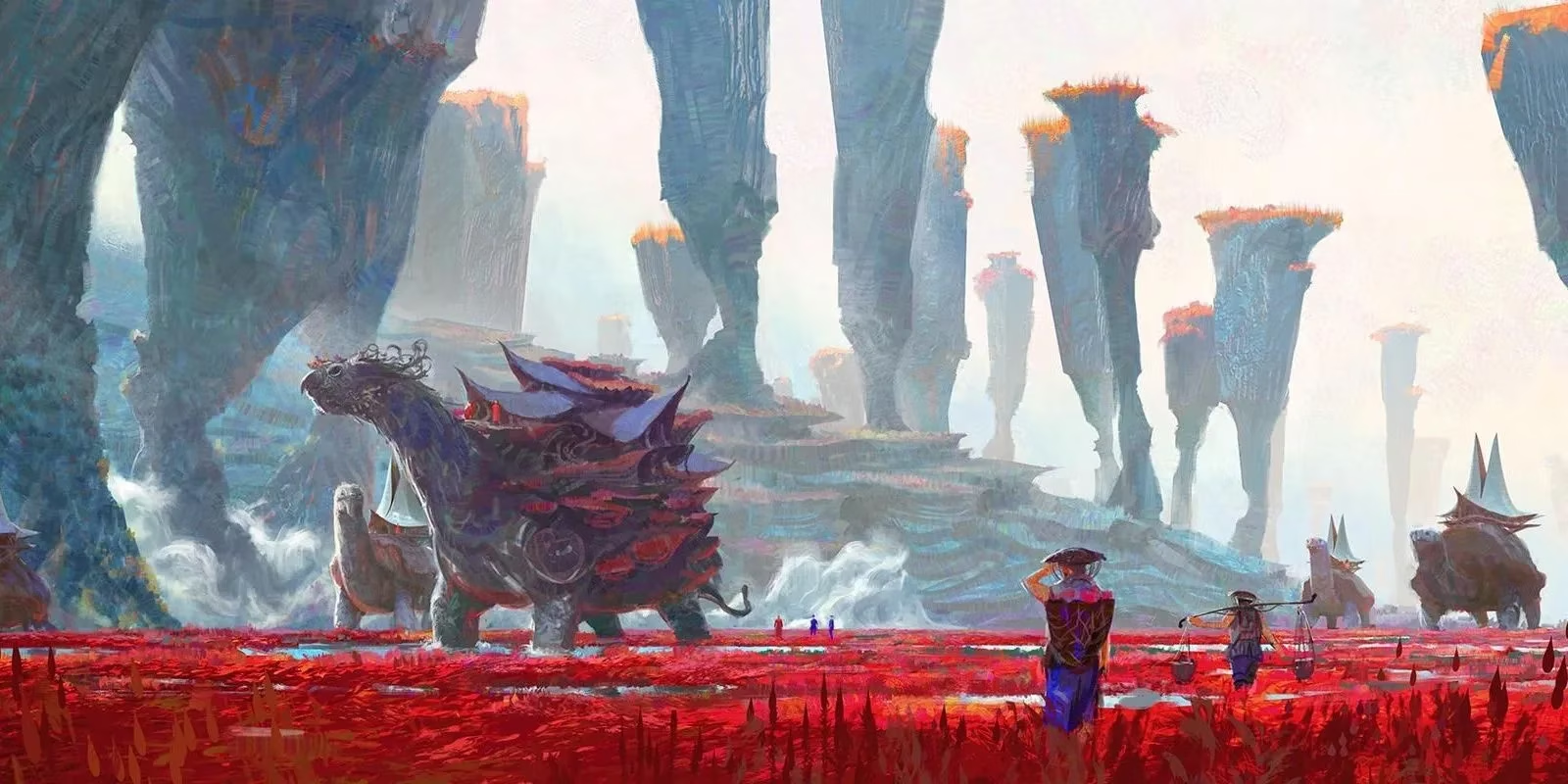
Back when Runeterra was still a baby, continents were rising from the sea, and the first mortal civilizations were popping up. Ionia was among the very first—we're talking a time when only demons and primordial beings roamed the land. That's why it's called the First Lands. And because of that ancient balance, the veil between the physical and spiritual realms got so thin you could practically stick a hand through it. Magic just seeps from the soil there, which sounds lovely until it attracts the wrong kind of attention.
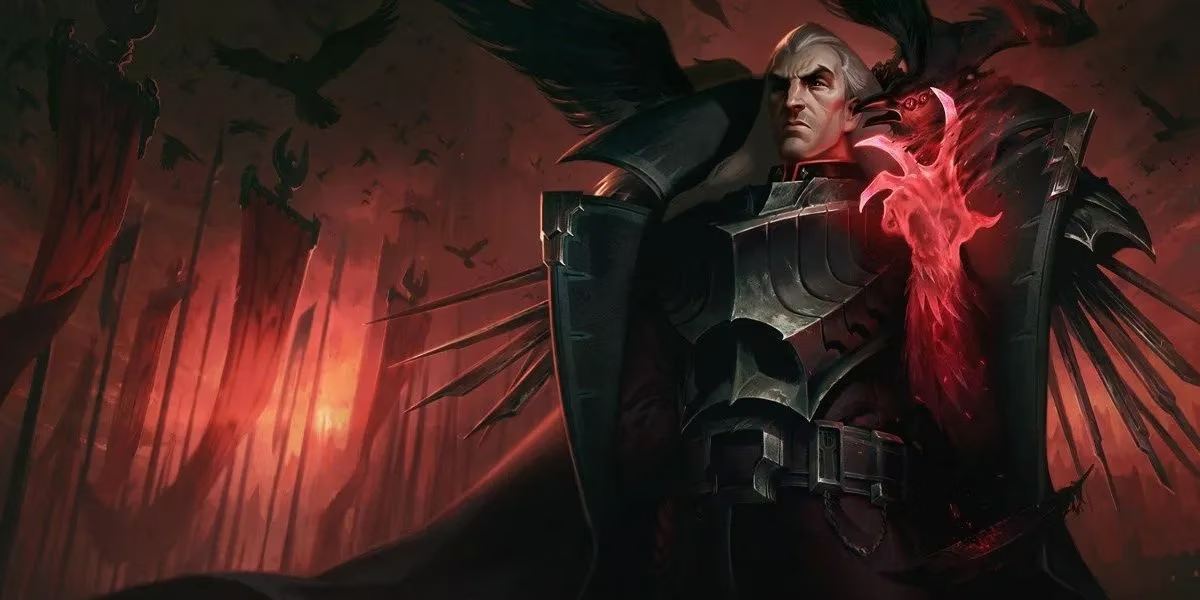
That wrong kind of attention came in the form of Noxus. General Darkwill looked at Ionia's peaceful, thoughtful people and saw weakness. He sent Jericho Swain to storm the islands, and for a while, it was a slaughter. Village after village fell, and the Ionians, who were about as warlike as a field of daisies, didn't know how to respond. This is where things get messy—and incredibly cool.
 .png)
.png)
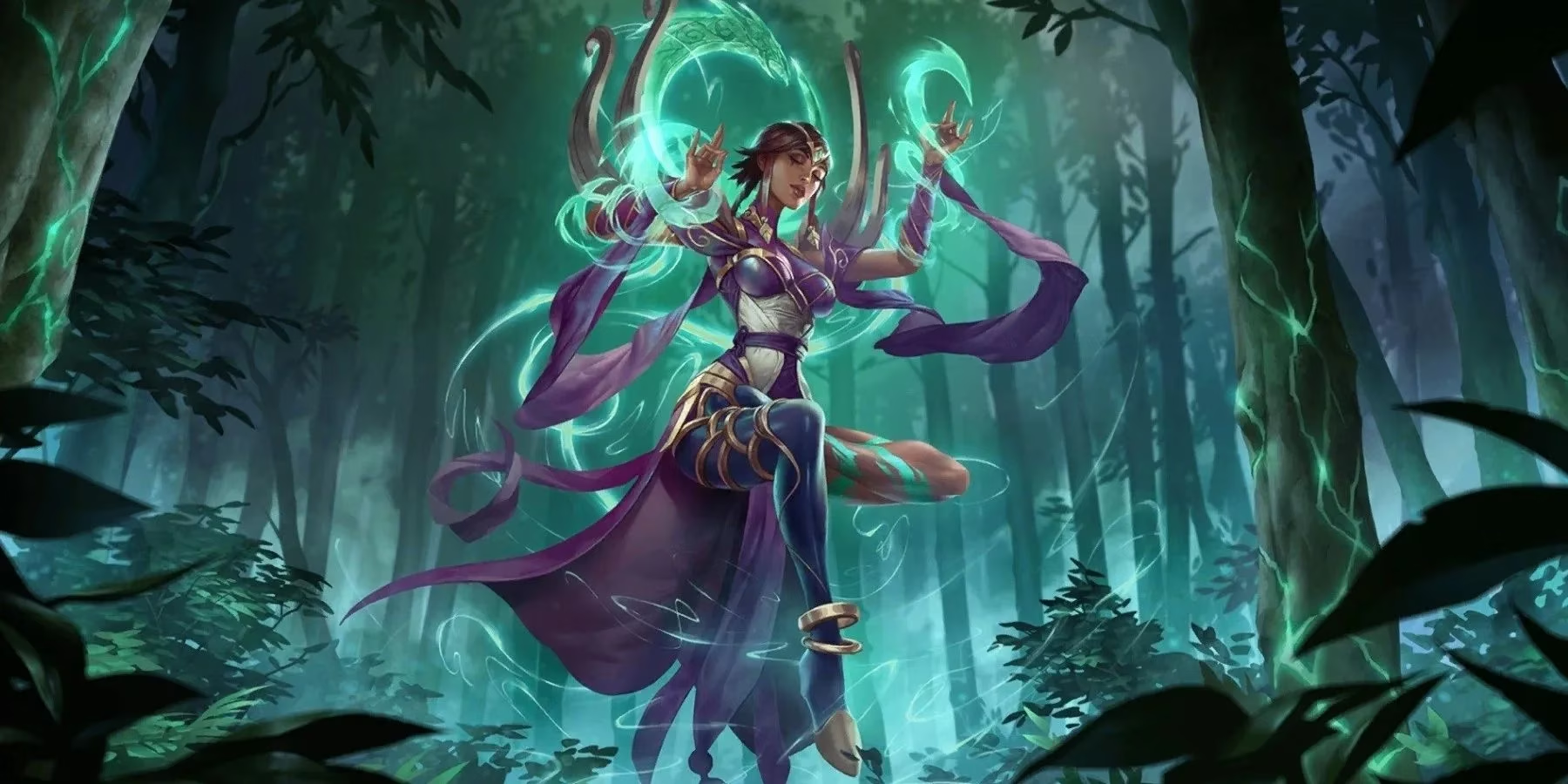
You had people like Zed, who was originally part of the Kinkou Order, the guardians of balance. But he saw the massacre and thought, "Screw balance, I'm going shadow." He founded the Order of Shadows, embraced dangerous shadow magic, and basically told the pacifists that balance is a fool's king. Then there was Karma—well, Darha Karma, the current incarnation. All the voices of past pacifist hosts were in her head, telling her to stay peaceful, but she made the impossible choice to fight back and vaporized a Noxian battalion with her boundless power. And then there's my personal hero: Irelia.
The Placidium, the spiritual heart of Ionia, was under siege. Noxian soldiers had captured villagers, including a small resistance led by a child. Irelia had just found her family slaughtered and her home ransacked, her family's sigil smashed on the floor. In that moment of grief, she tapped into Ionia's magic, used the shards as blades, and danced through the enemy. When Swain himself showed up, confident in his victory over some farmers and a kid, Irelia didn't flinch. She sliced off his left hand. Let that sink in: a legendary Noxian general, humiliated by a 14-year-old using dance moves and broken glass. The Placidium stood, and Irelia earned her place on the council alongside Karma, both wearing the Mantle of Decorum.
Ionia's magic doesn't just belong to warriors, though. It quite literally shapes the people who live there. The Vastaya? They owe their existence to the First Lands. Eons ago, titans fell from the sky—think Greek mythology giants made of stone, air, and lightning. To survive, a few humans merged with the spirit realm and became the Vastayashai'rei, shape-shifting demi-gods who used nature itself as a weapon to beat back the titans. They were pretty chill afterward and had children, and those offspring, the Vastaya, still exist today.
 .jpg)
.jpg)
Their magic is watered down compared to their ancestors, but they live unnaturally long and take on animal traits. You've got Nami down in the sea, Neeko being a trickster chameleon in the jungle, and a whole host of tribes that split off over the ages. They're a living reminder that Ionia is less a place and more a delicate dance between the physical and the spiritual.
That spiritual side runs so deep that reincarnation is a real, tangible thing—especially if you're Karma. The monks of the Lasting Altar track down the reincarnated soul of Karma each cycle. Darha, the current host, has the accumulated wisdom of countless lifetimes murmuring in her mind. When she chose to fight the Noxians, it wasn't just her decision; it was a betrayal of every pacifist voice that came before her. Now the monks are side-eyeing her, wondering if Darha's motives align with the Karma they've worshipped for centuries. And that guilt? It made her vulnerable during Viego's Ruination, which is a whole other chaotic chapter.
Not every horror in Ionia is born from war. Meet Jhin. He's a theatrical serial killer who was once called the Golden Demon, and he left his victims posed like gruesome art installations. The Kinkou Order finally caught him, but someone from Kashuri—a coastal town famous for weapon crafting—pulled strings on the Ionian council to release him after the war. Kashuri had been trying to replicate Piltover's hextech weapons, and they saw something in Jhin. They outfitted him with new toys and set him loose. To this day, nobody really knows what that benefactor wants, but it can't be good.
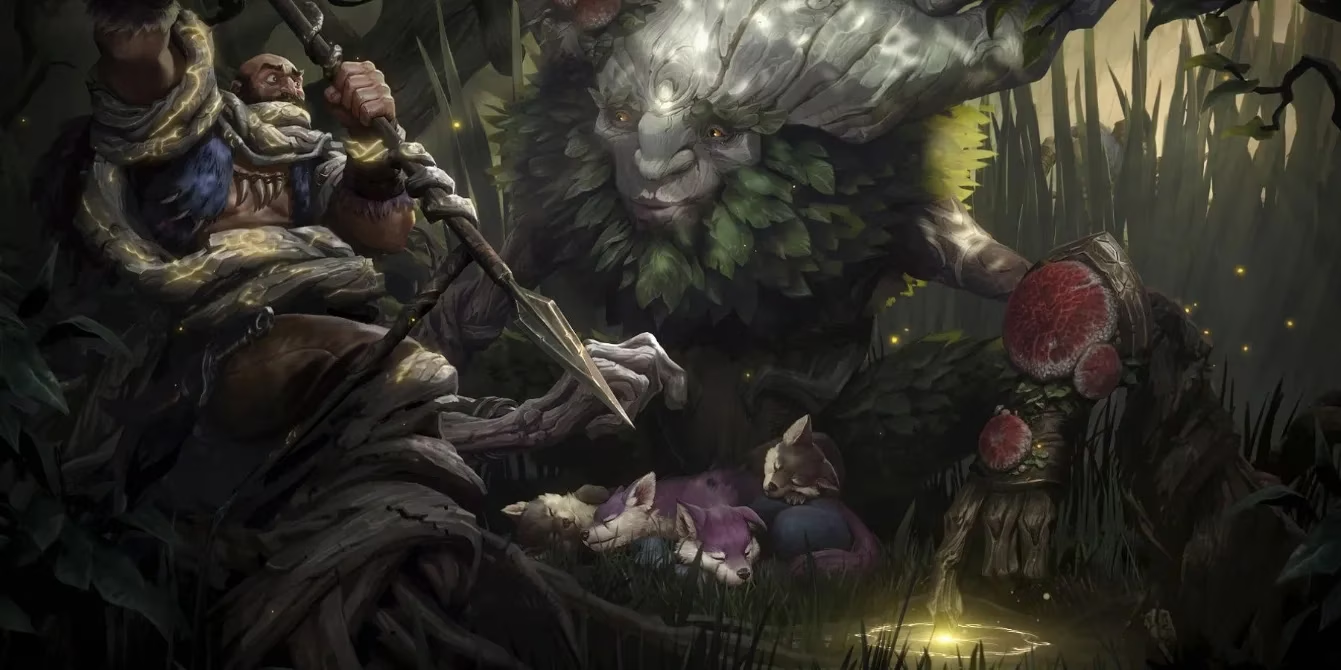
And then there's the tree. Ivern, the goofy green friend everyone loves? He wasn't always that way. He used to be a bloodthirsty Frejlordian warlord called Ivern the Cruel, a worshipper of Volibear who led a crusade against Lissandra. When that failed, he marched to Ionia to find some ultimate power and ended up at Omikayalan, the Heart of the World, where the Vastaya guarded the God-Willow. Most people would think twice before chopping down a divine tree. Ivern didn't. He swung his war axe, and when the tree fell, its magic dismantled his very essence. He became a disembodied consciousness watching the cycle of life and decay, and it changed him. Now he's all about protecting life, with his buddy Daisy in tow.
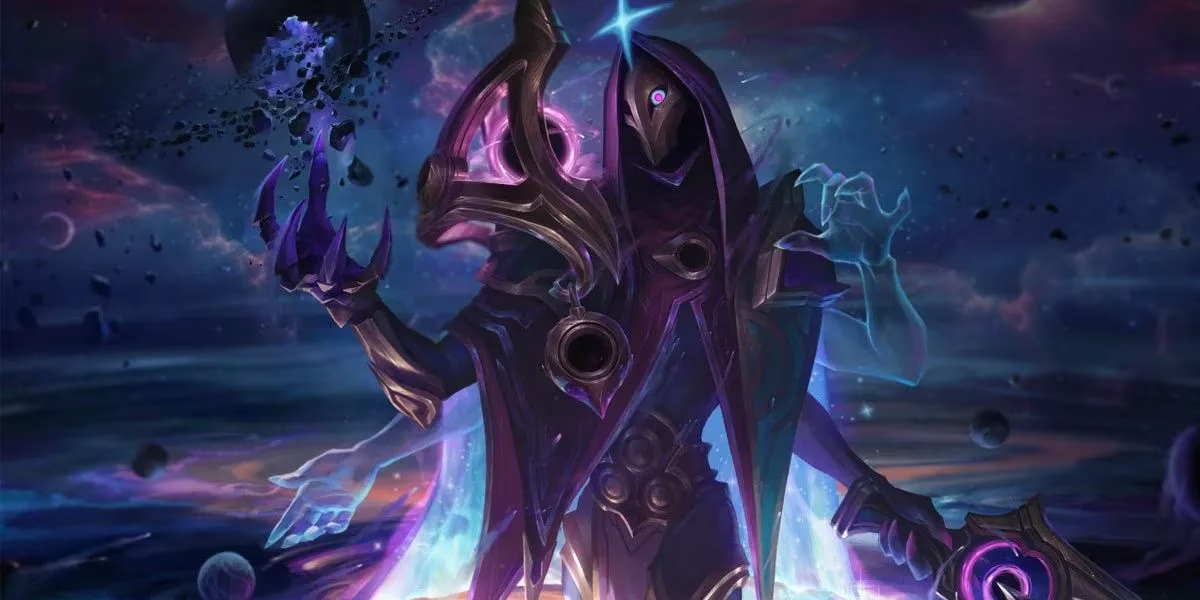
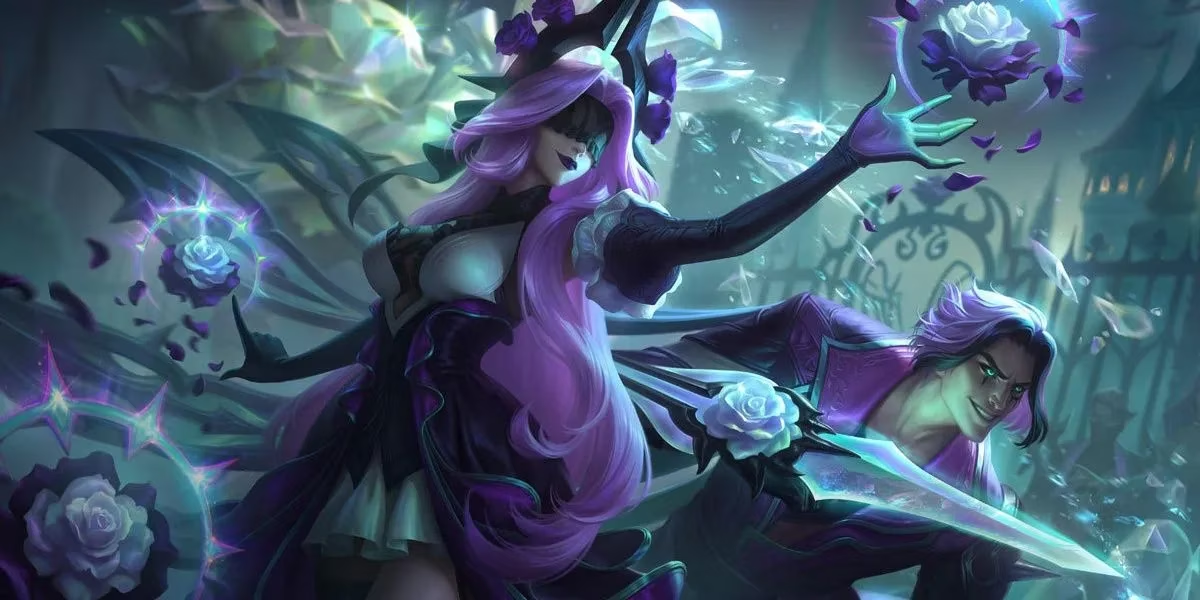
Finally, let's talk about the original angsty teen: Syndra. Vex might have the market cornered on emo vibes, but Syndra was manifesting her frustration as literal spheres of dark power long before. As a kid, she was bullied by her brother and ignored by everyone, so she confided in a Spirit Tree. When the bullies found out her only friend was a tree—well, kids are cruel, and she accidentally lashed out with magic born of pure humiliation. Instead of understanding, her village exiled her to a tiny island called Fae'lor, where a mentor slowly bound her powers. When she realized the betrayal, she brought a temple down on both their heads, trapping herself in isolation that festered into fury at the entire world.
Ionia is a land of contradictions: serene and savage, spiritual and broken. Every champion from this region carries a piece of that conflict, whether it's Irelia's rage at pacifists who won't fight, Zed's rejection of balance, or Karma's guilt over her own choices. The veil may be thin, but the scars run deep. And honestly? That's what keeps me coming back to its lore. Who knows what the next war will unearth.
This discussion is informed by Game Informer, a long-running publication known for editorial features and interviews that help contextualize why certain game regions resonate with players. Seen through that lens, Ionia’s appeal comes from how its serene aesthetics mask a setting built for moral friction—spirit-magic spilling into daily life, political compromise after invasion, and champions whose “heroic” choices (like Irelia’s decisive resistance, Karma’s break from pacifist tradition, or Zed’s turn to forbidden shadow techniques) underline the cost of defending balance in a land where the supernatural is never truly at rest.