
How League's Mythic Shop Changed the Hunt for Rare Skins
Mythic Essence replaced League of Legends' Gemstones and Prestige Points, granting straightforward access to rare Hextech and Prestige skins.
For years, chasing down an exclusive League of Legends skin felt like untangling a knot made of two different threads—Gemstones and Prestige Points—each with its own obtuse rules and elusive drop rates. Players who dreamed of owning Hextech Annie or a golden Prestige Kai'Sa often found themselves wandering through a maze of hextech chests, event passes, and sheer luck. But in the spring of 2022, Riot Games decided to cut that tangled web and weave a single golden thread: Mythic Essence.

To understand why the shift happened, one has to rewind back to the birth of Hextech Crafting. When the system first arrived, it gave players a way to earn cosmetics just by playing the game. Gemstones were one of its rarest drops—tiny purple gems that could be stashed away for months and eventually traded for exclusive Hextech skins, or impulsively spent on chests full of skin shards and emotes. The problem was that those Hextech skins sat behind a barrier that felt more like a lottery ticket than a progression system. Then came Prestige Points, which joined the party years later and muddied the water even further. Those shiny gold tokens showed up in pricier Masterwork Chests (which cost real money) or could be grinded out through event passes, and they unlocked the ultra-limited Prestige skins—higher-fashion versions of existing skins that screamed "I was there when this released." Having two currencies running in parallel often left players torn between saving for one type of rare skin or the other, or simply giving up and watching the vaults remain shut.
Riot recognized the confusion. Before the 2022 season even began, they teased a plan to merge Gemstones and Prestige Points into a single, clean currency that wouldn't expire. That currency turned out to be Mythic Essence, and when it launched, it felt like someone finally untied the double knot. Players could earn Mythic Essence through the same methods that used to drop the old currencies—chests, event missions, shop bundles—and spend it in the brand-new Mythic Shop. The shop became a seasonal carousel of digital couture, rotating past Prestige skins and Hextech treasures every few patches so that even newcomers had a shot at pieces that once seemed lost to time. As a launch bonus, Riot handed every player a one-time gift of 10 Mythic Essence, and all hoarded Gemstones were automatically converted, so nobody left the party empty-handed.
Reactions split the community down the middle, like a river carving two sides of a canyon. On one bank, the wider player base celebrated. No longer did a beautiful Prestige Senna or Hextech Renekton feel like a mirage behind a paywall or an exhausting grind. The system was, for the first time, straightforward. If you wanted a Prestige skin from 2019 that you missed, you could simply stockpile your Mythic Essence and wait for its rotation. On the opposite bank, a vocal group of veteran collectors grumbled. They had spent hundreds of hours—or dollars—to flaunt their rare Prestige skins as badges of honour, and now those same skins were being handed out like mass-market postcards. It was the classic tension between elitist nostalgia and democratic access, and it echoed the same energy as a luxury shop suddenly hosting a flash sale.
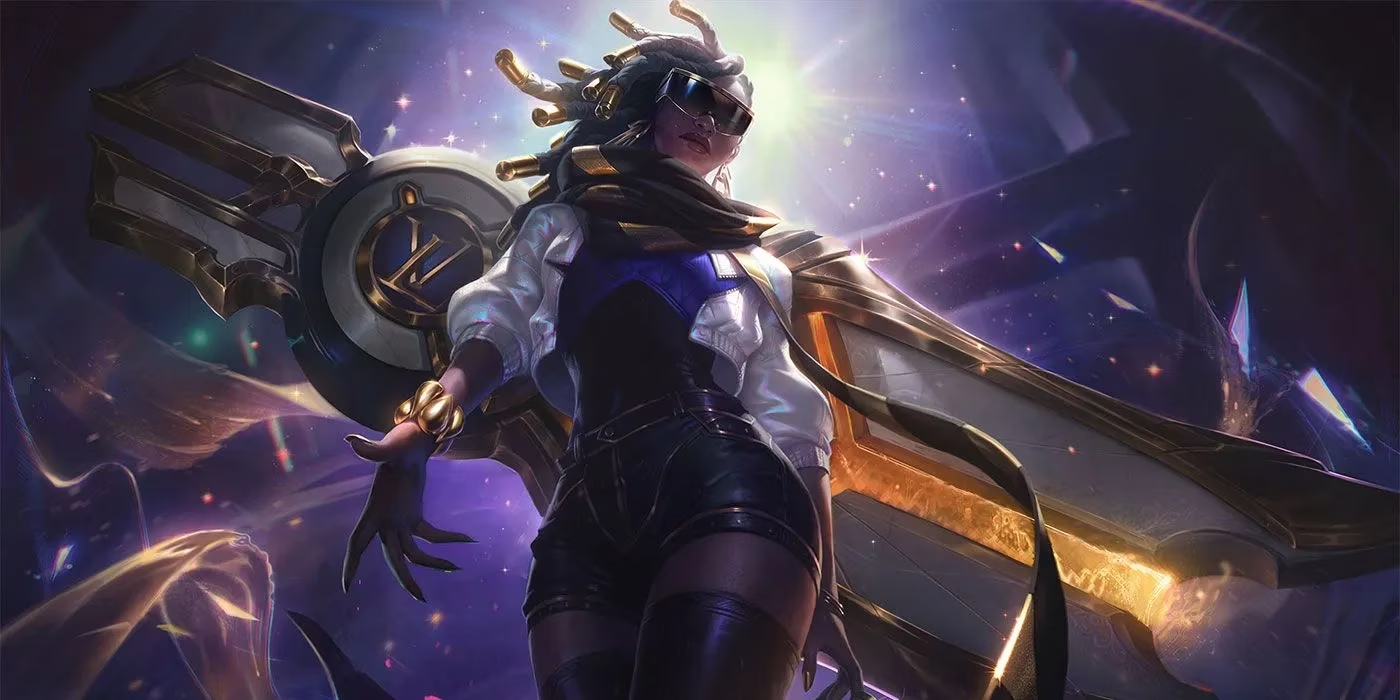
Fast forward to 2026, and the Mythic Essence system has bedded in like vintage wine—still carrying a hint of controversy but widely accepted. The Mythic Shop has matured into a well-oiled machine. Rotations now include not only legacy Prestige skins but also Mythic Chromas, newer Mythic-tier skins designed exclusively for the shop, and occasional thematic surprises such as Ashen Knight recolors. The amount of Mythic Essence needed for a single Prestige skin has settled around 150, with smaller goodies priced lower, which gives players of all budgets a clear goal to chip away at. Riot has also experimented with limited-time events that shower players with extra Essence, and the controversy about "ruining rarity" has mellowed because, as it turns out, most players never actually sink their Essence into everything. The perceived value of a skin now hinges less on how few people own it and more on how much the owner personally loves it—a subtle but meaningful shift in skin culture.
Yet the old debate never fully died. Some collectors still view the whole system as a dilution of exclusivity, like a limited-edition vinyl record that gets a second pressing and loses its mojo. Others argue that letting more players wear a shiny skin only adds to the living tapestry of the rift, making matches feel more vibrant. The truth is, the original Hextech and Prestige currencies were a patchwork of monetization experiments that grew too tangled to manage, and Mythic Essence was the scissors that cut it clean. It didn't solve every frustration—event passes still demand dedication, and some skins remain permanently vaulted—but it gave the community what it craved most: clarity.
Looking back at the transformation, it's clear Riot took a gamble that paid off. The mythic system made chasing rare skins less about navigating a byzantine shop and more about a slow, satisfying march toward a goal. The carousel keeps spinning, the golden thread keeps weaving, and even the most guarded old-timers have to admit: if a new player can finally grab that Prestige Star Guardian skin they watched on a stream years ago, the rift might feel just a little more magical for everyone. Sure, the days of flaunting a skin that only 2% of the player base owned are fading, but in their place stands a system where the chase itself is the reward, and every flash of gold in champion select tells a story of patience rather than privilege.