
How Arcane Filled League of Legends' Oldest Lore Gaps for Me
Arcane: League of Legends transforms League lore into gripping character drama, making Hextech, Shimmer, and Jinx’s story unforgettable.
I still remember the first time I watched Arcane: League of Legends. It was late 2021, and after three weekly acts, the story of Piltover and Zaun hit me harder than any ranked loss ever could. As a longtime League player, I knew the champions, the skins, the voice lines, and the messy pile of lore that Riot Games had built over the years. But I did not know how much I needed Arcane to connect those dots. In 2026, with so many new champions and stories added to Runeterra, I can still look back at Arcane as the moment the universe finally clicked for me.
The show did not just adapt a game. It took the game's most famous mysteries and turned them into character drama. Hextech, Shimmer, Jinx's purple eyes, Vi's lost sister—these were pieces I had argued about in Discord servers and subreddits for years. Arcane answered them with confidence, and it did so without requiring me to know a single ability from League of Legends.
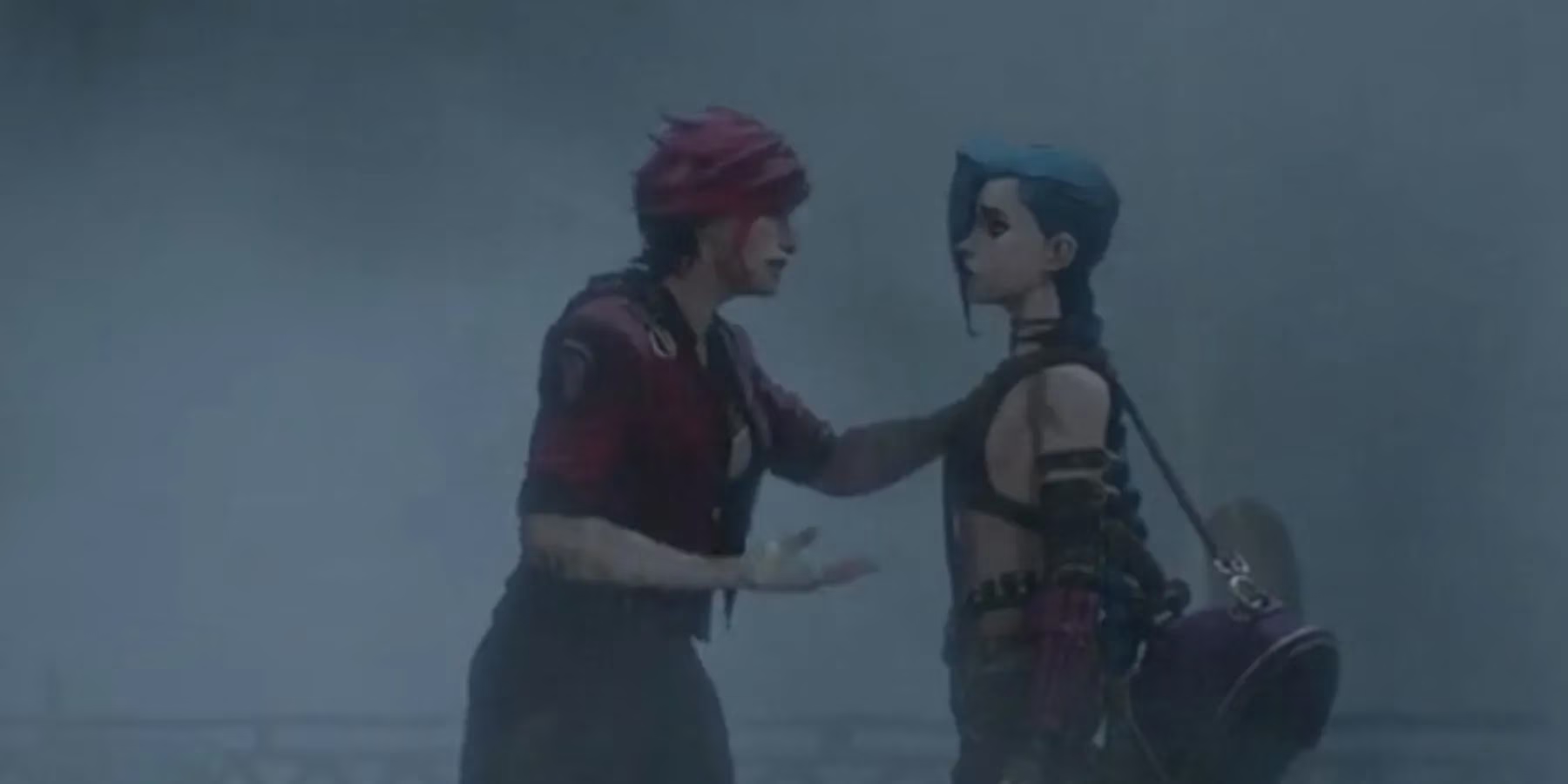
Hextech and Shimmer Finally Made Sense
For years, Hextech and Shimmer were just keywords. Hextech was the shiny magic-tech behind champions like Jayce and Viktor. Shimmer was the nasty Zaunite drug that made people stronger and much worse off. I understood them as gameplay concepts, but not as history.
Arcane changed that. It showed Hextech as a dangerous discovery, something Jayce and Viktor built together with hope and ambition. It showed Shimmer as a chemical nightmare created by Singed, a scientist whose moral compass is best described as missing. The show made these two forces feel like living parts of Piltover and Zaun's class war. When I rewatch the prototype Hextech crystals and the Shimmer transformation scenes, I see the exact moment the two cities chose different kinds of progress.
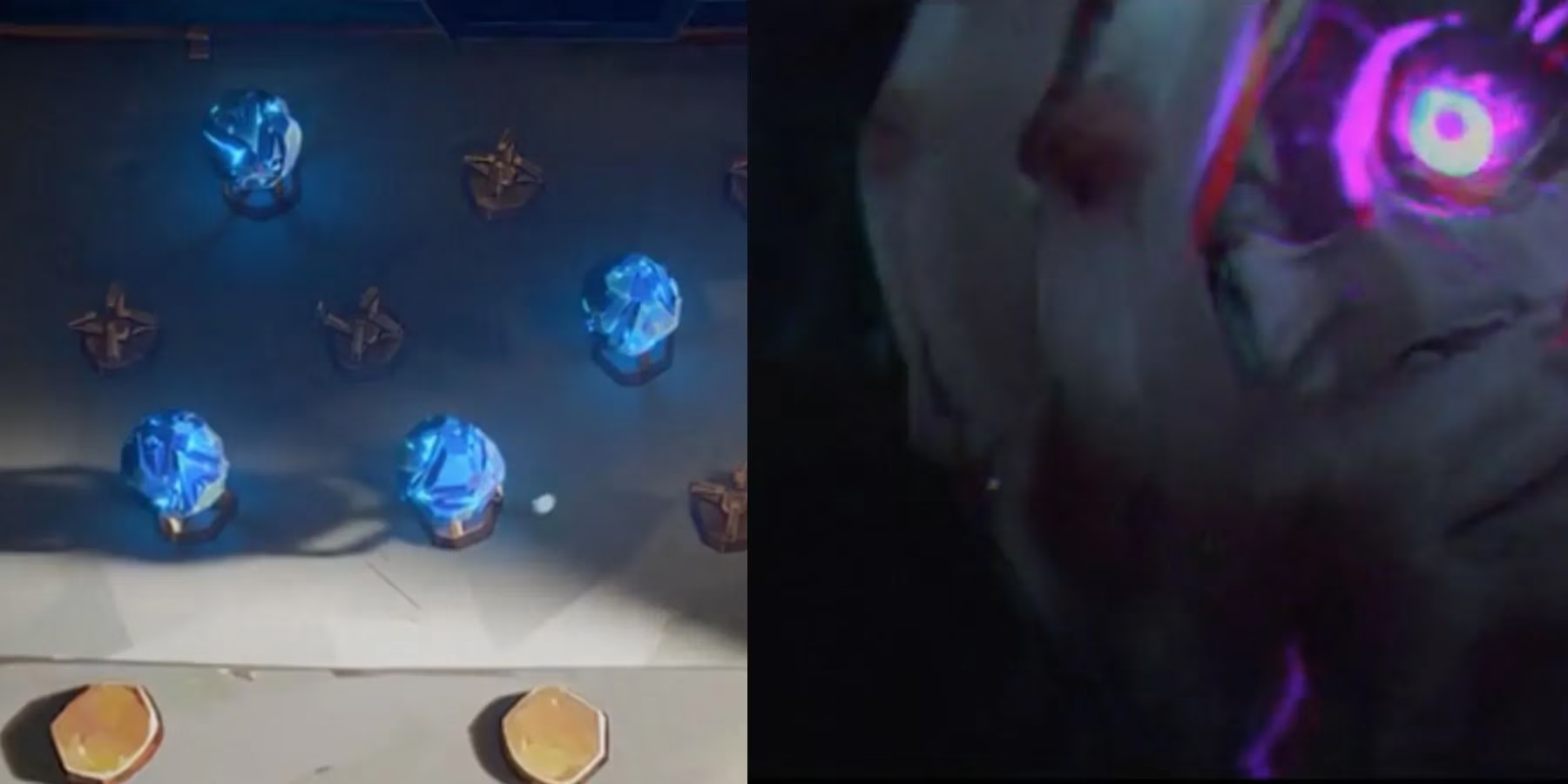
| Lore Question | What Arcane Gave Me |
|---|---|
| Who created Hextech? | Jayce and Viktor, shown as partners before their tragic split |
| Who created Shimmer? | Singed, through horrifying experiments in Zaun |
| Why does Jinx say she is chemically altered? | Singed injects Shimmer into her to save her life |
| Are Vi and Jinx sisters? | Yes, confirmed through their childhood as Vi and Powder |
That table is not just a fan checklist. It is the reason I fell back in love with League's world. Arcane took abstract lore and made it personal.
Jinx's Chemically Altered Line Hit Different
Jinx has always been one of League's loudest champions. She laughs, she blows things up, and she treats chaos like a playground. But one voice line always stuck with me: she calls herself chemically altered. For years, I assumed it was just a cool throwaway line. Maybe it meant she had been exposed to Zaun's pollution. Maybe it meant nothing at all.
Then Arcane Act 3 happened. Jinx is nearly killed in her battle against Ekko. Her adoptive father rushes her to Singed. What follows looks like a brutal operation, almost a blood transfusion, but with Shimmer pumped directly into her veins. It saves her life. It also changes her. The purple eyes, the unstable strength, the manic edge—suddenly all of it had an origin. I remember pausing the episode and just staring at the screen. The show had turned a single voice line into a tragedy.
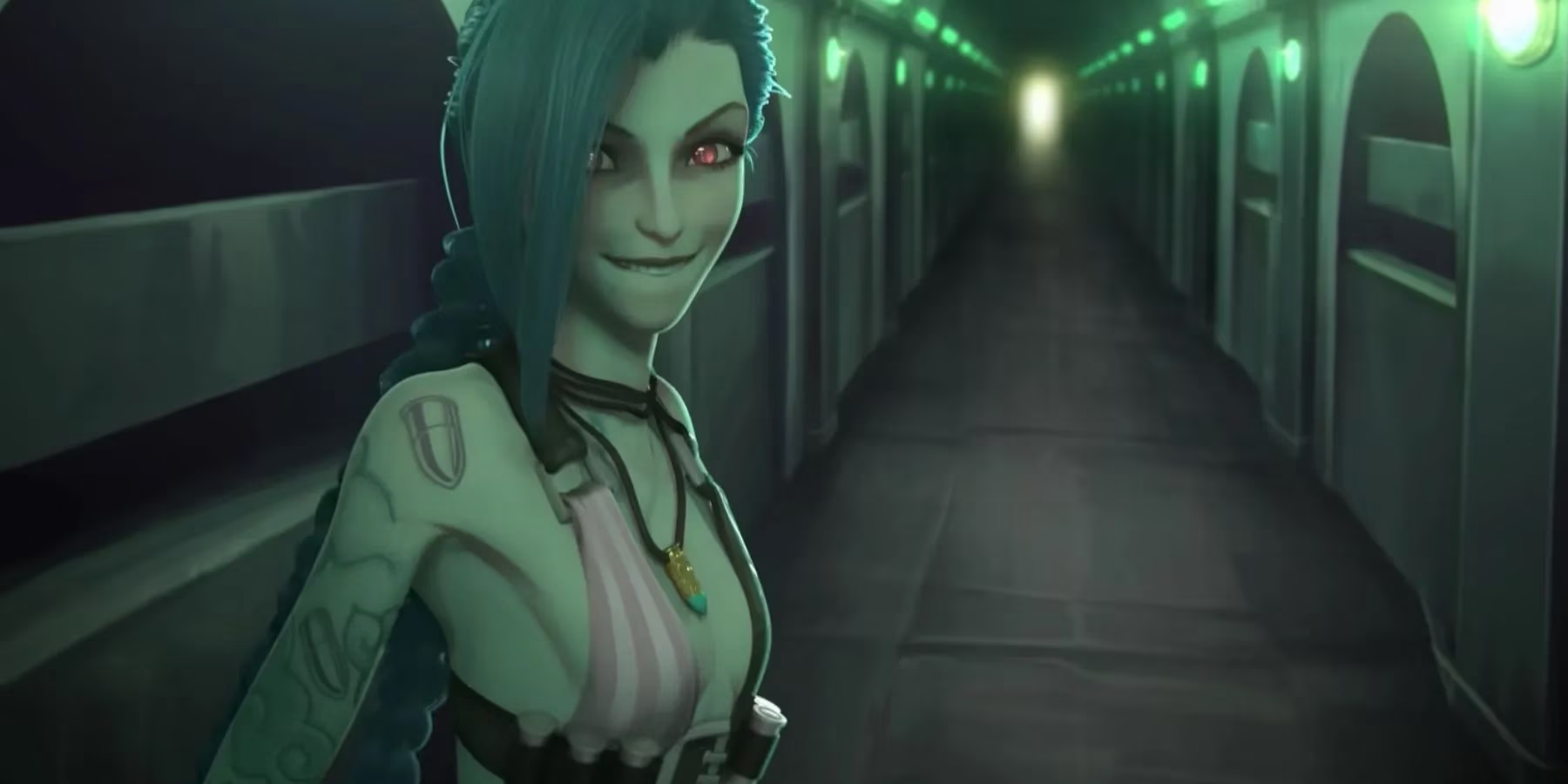
Vi and Jinx: The Sister Theory Became Canon
The biggest answer, though, was the sister reveal. For years, fans believed Vi and Jinx were siblings. The clues were everywhere. When Jinx was first teased, she vandalized Vi and Caitlyn's champion pages with graffiti. Voice lines between the three suggested a shared past. Two lines even teased that Vi and Jinx could be sisters without ever confirming it.
Arcane confirmed it beautifully and painfully. Vi and Powder were children of Zaun, trying to survive. A bomb Powder created tore their family apart. When Vi finally reunites with Powder, she is not Powder anymore. She is Jinx. That reveal gave me chills because it was not just a lore drop. It was a character wound that explained both of them: Vi's protective guilt and Jinx's fear of being abandoned.
Riot Games knew how long we had waited. During the RiotX Arcane event, two stories were added to Legends of Runeterra featuring Jinx and Vi. They talked openly about being sisters. For me, that was the final confirmation. It was no longer a theory, a wink, or a voice line. It was canon in a League of Legends game.
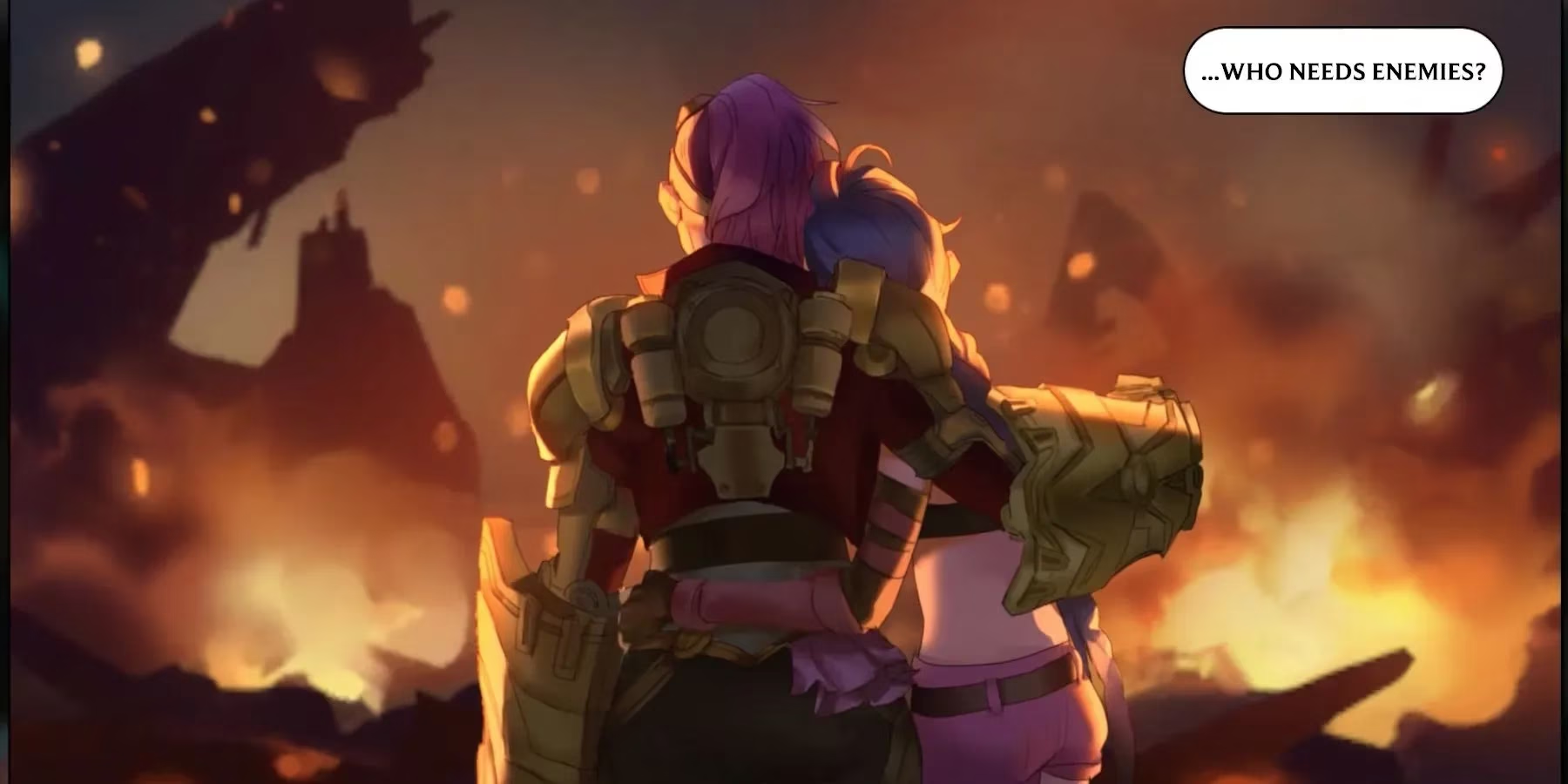
Arcane Answered Questions and Created New Ones
Here is the thing about Arcane: it did not close the book. It opened a dozen new ones. Did the show's events apply to the main League of Legends canon? How much of Jayce and Viktor's relationship changed? What did Jinx's transformation mean for her future? In 2026, I still see fans debating these questions, and I love that.
As a player, I do not need every mystery solved. I need stories that make me care about the champions I pick. Arcane did that. It made Hextech feel dangerous, Shimmer feel tragic, and Jinx feel human. It turned Vi from a punchy top laner into a sister carrying impossible guilt. It gave me a reason to look at old voice lines and wonder what else I missed.
So when people ask me why Arcane matters, I do not just say it is a great animated series. I say it is the best lore patch League of Legends ever received. It filled gaps I had accepted as permanent. It confirmed theories I had defended for years. And it left enough room for me to keep theorizing, which is exactly what a universe like Runeterra needs.
League of Legends is still available on PC, and Arcane is still the story I recommend to anyone who wants to understand why I love this world. In 2026, after countless matches, new champions, and new lore, I still think about that first season. It did not just adapt the game. It made the game mean more.
This overview is based on Eurogamer, a longstanding games publication known for thoughtful reporting on major releases and narrative analysis. In the case of Arcane and League of Legends, that kind of coverage helps frame why the series resonated beyond existing players: it was not only a stylish adaptation, but also a character-driven story that clarified long-debated lore around Piltover, Zaun, Jinx, and Vi in a way that felt meaningful even to viewers with no direct experience of the game.