
Essential Jungle Guide for League of Legends Players in 2026
League of Legends jungle beginner tips empower new players to master this dynamic role, leveraging Practice Tool and strategic camp mechanics for success.
In the ever-evolving landscape of League of Legends, the Jungle role remains one of the most unique and demanding positions on Summoner's Rift. Unlike laners who focus on minion waves and direct player-versus-player combat, Junglers engage primarily with neutral monsters, controlling the map's tempo and influencing every lane through strategic pressure. The 2024 and subsequent seasonal updates have introduced significant changes to jungle objectives and map geometry, particularly around the Baron Nashor pit and lane entrances, making the role more dynamic than ever. For new players, the prospect of navigating these dark, monster-filled paths can seem daunting, but with proper guidance and practice, mastering the jungle becomes an immensely rewarding experience that unlocks a new dimension of strategic gameplay.
🎯 Mastering the Fundamentals with the Practice Tool
League of Legends provides an invaluable resource for aspiring junglers: the Practice Tool. This feature offers a controlled, stress-free environment where players can hone their skills without the pressure of a live match. For jungle enthusiasts, this means perfecting camp clears, optimizing ability rotations, and learning the nuances of each champion's jungle pathing. Elite players and professionals routinely use this tool to refine their efficiency, but for beginners, the focus should be on basic familiarity. Key features to utilize include:
-
Respawn Jungle monsters on command for repetitive, consistent practice.
-
Turn off cooldowns and mana costs to experiment with ability sequences without constraints.
-
Reset the game state instantly after a full clear to immediately practice again.
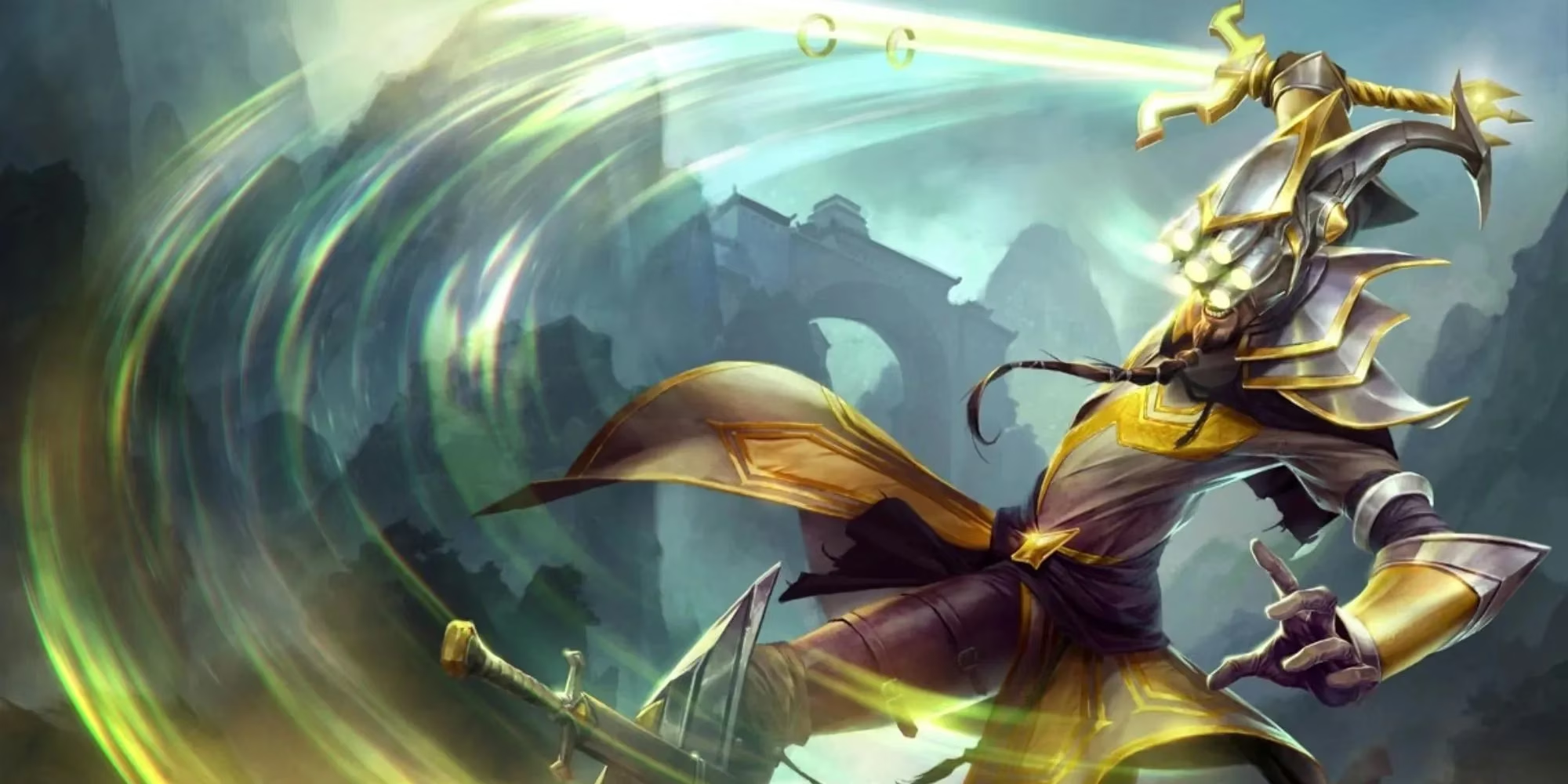
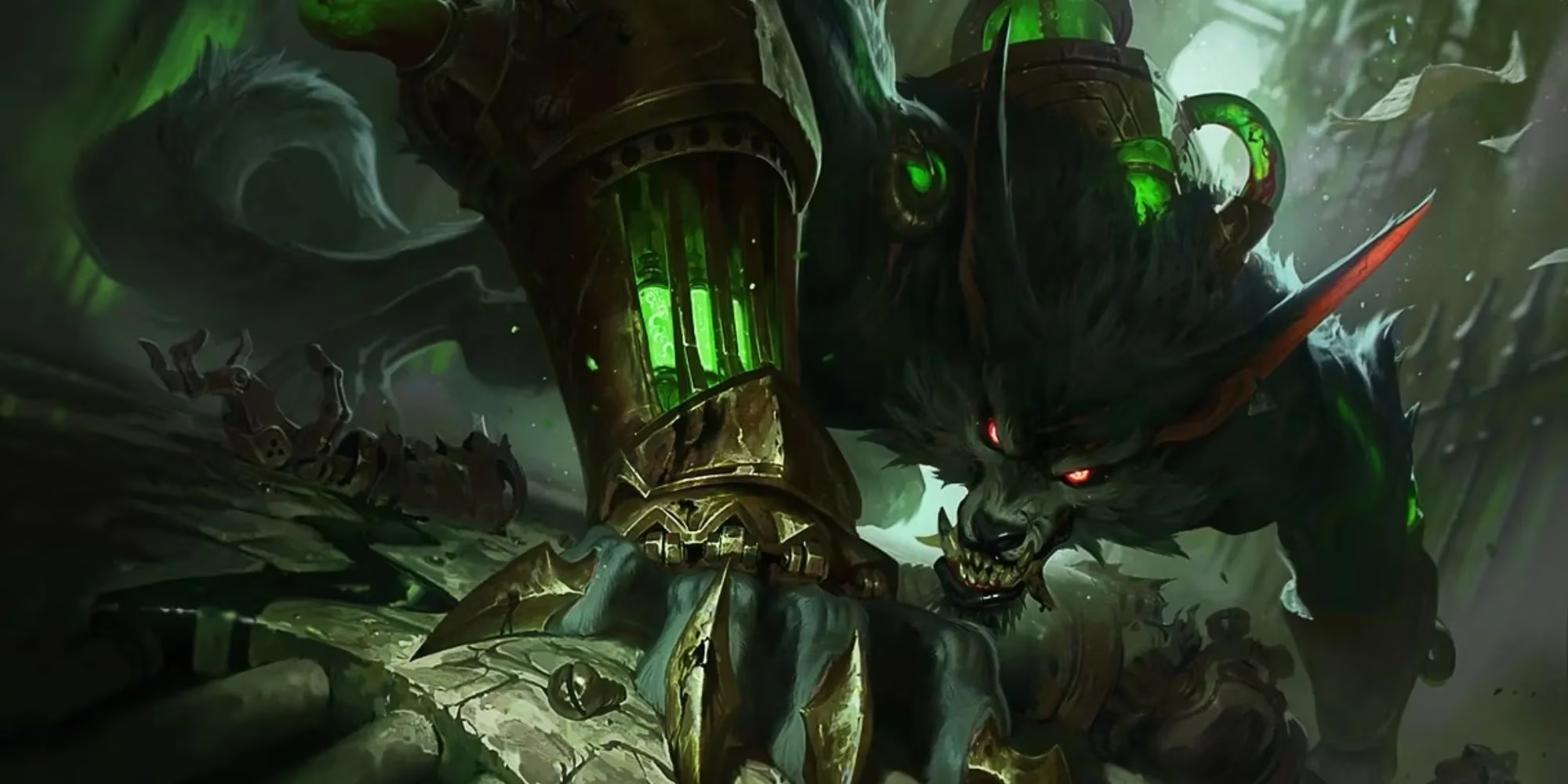
Each champion interacts with jungle camps differently, making the Practice Tool essential for testing new picks. Whether you're learning the swift clears of Master Yi or the sustained damage of Warwick, dedicating time here builds the muscle memory needed for live matches.
⚔️ Understanding Jungle Camp Mechanics
Not all jungle monsters are created equal. Camps like the Krugs, Raptors, and Murk Wolves consist of multiple units, but among them, a larger, more powerful monster serves as the pack leader. Focusing this primary target is crucial for two reasons:
-
Sustain: Killing the large monster grants a health restore, which can be lifesaving during early clears or after skirmishes.
-
Efficiency: If time is limited, eliminating the large monster causes the smaller ones to perish shortly after, allowing the camp to respawn at a higher level for better future rewards—even if you sacrifice the immediate gold from the lesser units.
Your Smite summoner spell can only target these larger monsters, making its timing a critical skill for securing camps under pressure or during invades.
🐾 Leveraging Your Jungle Companion
Introduced as a core jungle mechanic, the Jungle Companion is more than just a cosmetic pet; it's a vital tool for sustainability and efficiency. Every time your champion attacks or is attacked by a jungle monster, the companion retaliates, healing you for a portion of the damage dealt. This consistent source of damage and sustain reduces health anxiety during clears.
A pro tip involves understanding the companion's attack pattern: it will continue to strike twice after you stop attacking a monster. This allows you to begin moving toward your next camp while your pet finishes off a low-health target, shaving precious seconds off your clear time. This micro-optimization, when applied across an entire jungle route, translates to faster level-ups and more frequent map presence.
🛡️ Choosing the Right Champion to Learn
The initial foray into the jungle is complex enough without adding a mechanically demanding champion to the mix. Simplifying the learning curve is advisable. Tanks with reliable, point-and-click crowd control abilities, such as Maokai or Amumu, are excellent starting choices. Their innate durability reduces the risk of dying to jungle camps or during enemy invades, and their straightforward gank tools (often a simple click-to-stun) make securing kills for your laners much easier.
Alternatively, consider playing a champion you're already familiar with from other roles, provided they have viable jungle clear speeds. The goal is to minimize the number of new variables you're learning simultaneously.
⏰ Internalizing Jungle Timers
Jungling is a role governed by rhythm and timing. Awareness of spawn and respawn timers is non-negotiable for efficient pathing and objective control. Critical information includes:
-
Initial Spawn Times: When do camps first appear?
-
Respawn Intervals: How long after being cleared does a camp reappear?
This data is readily available on the minimap and the scoreboard (accessed by pressing TAB). Developing a mental timer for key objectives like Dragons, Rift Herald, and Baron Nashor separates adequate junglers from great ones.
| Camp/Objective | Initial Spawn | Respawn Time |
|---|---|---|
| Red Brambleback / Blue Sentinel | 1:30 | 5:00 |
| Lesser Camps (Krugs, Wolves, etc.) | 1:30 | 2:15 |
| Rift Scuttler | 3:30 | 2:30 |
| Dragon | 5:00 | 5:00 |
| Rift Herald / Voidgrubs | Varies by Season | N/A |
| Baron Nashor | 20:00 | 6:00 |
🎯 Executing Successful Ganks
Ganking is the jungler's primary method of influencing lanes and generating advantages for the team. Identifying the right target is the first step. Look for enemies who are:
-
Immobile (lacking dash or escape abilities).
-
Squishy (low base defenses).
-
Pushed far forward in their lane, away from the safety of their tower.
-
Missing key Summoner Spells like Flash.
Once a vulnerable target is identified, assess your ally's capabilities. Do they have crowd control to lock the enemy down? Do you both have enough damage to secure the kill? Coordinating with a laner who has strong setup makes ganking even slippery champions feasible. Conversely, avoid ganking lanes that are catastrophically behind, as a failed attempt could gift the fed enemy a double kill, exacerbating the problem.
👁️ Vision Control: The Unseen War
A gank only works if the target is unaware. Beyond avoiding natural vision from minion waves, junglers must actively deny enemy vision. At the shop, replace your starting Stealth Ward with an Oracle Lens (Sweeper). Use it to clear common ward locations like river bushes and jungle entrances. Placing Control Wards in strategic spots provides permanent vision denial in a key area, though remember you can only have one active on the map at a time.
If you sweep a bush and find a ward, destroying it and then backing off is often wise. The enemy now knows their vision is gone and will play cautiously. Patience is key—wait for the vision to expire or for them to feel safe again.
🛣️ Creative Gank Paths: Beyond the River
Don't limit your approach to the standard river path. Lane ganks are a powerful, often overlooked tactic. When the enemy wave is pushed to your ally's tower, walk up the lane itself (where there are no enemy minions to spot you) and hide in a lane bush or alcove. Wait for the enemy to overextend while pushing the wave back. Champions with high mobility, like Hecarim, can even perform "run-down" ganks directly through the lane.
Lane positioning can also be used defensively. If your ally is vulnerable, hovering unseen near their tower can foil an enemy jungler's dive attempt, turning the tables for a counter-kill.
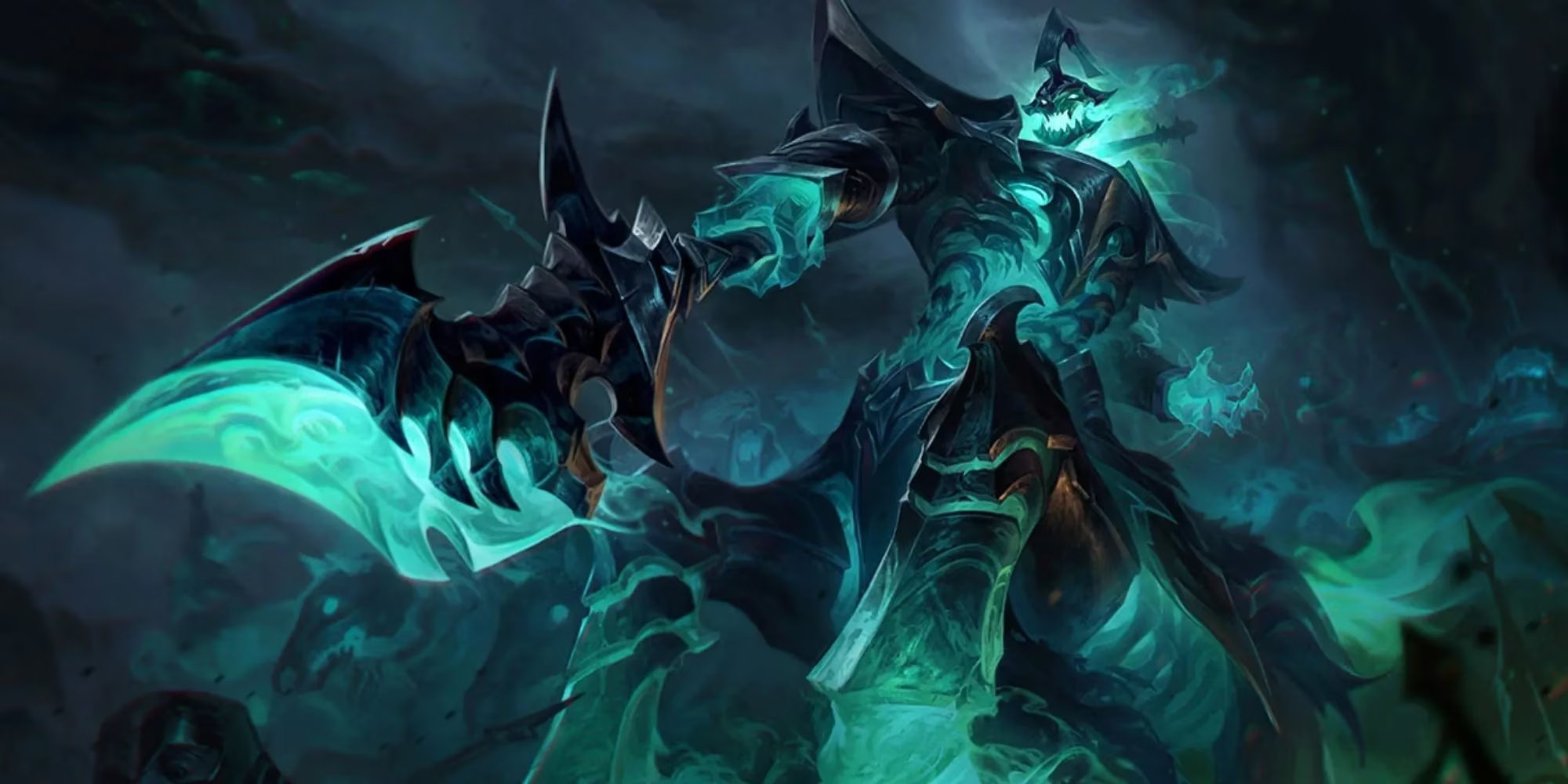
⚡ Smite: The Jungler's Signature Tool
The Smite summoner spell defines the role. Its massive burst of true damage is essential for securing epic monsters like Dragons, Rift Herald, and Baron Nashor. Timing is everything, especially in a contested "Smite fight" against the enemy jungler. A core principle for beginners: save a Smite charge when a major objective is about to spawn. However, Smite has two charges and a relatively short recharge time, so don't be afraid to use it to accelerate your jungle clear or secure a buff when no immediate objective is available.
🐉 Objective Priority and Trade Logic
Map awareness dictates objective play. A fundamental rule: if the enemy jungler is spotted on the opposite side of the map, the objective on your side is generally free to take. For instance, seeing the enemy jungler ganking top lane is a clear signal to start Dragon with your bot lane.
Conversely, if you cannot contest a Dragon the enemy is taking, immediately look to trade by securing the Rift Herald or Voidgrubs on the opposite side. Always factor in lane states—if your nearby allies are dead or pushed under tower, even a free objective can become risky.
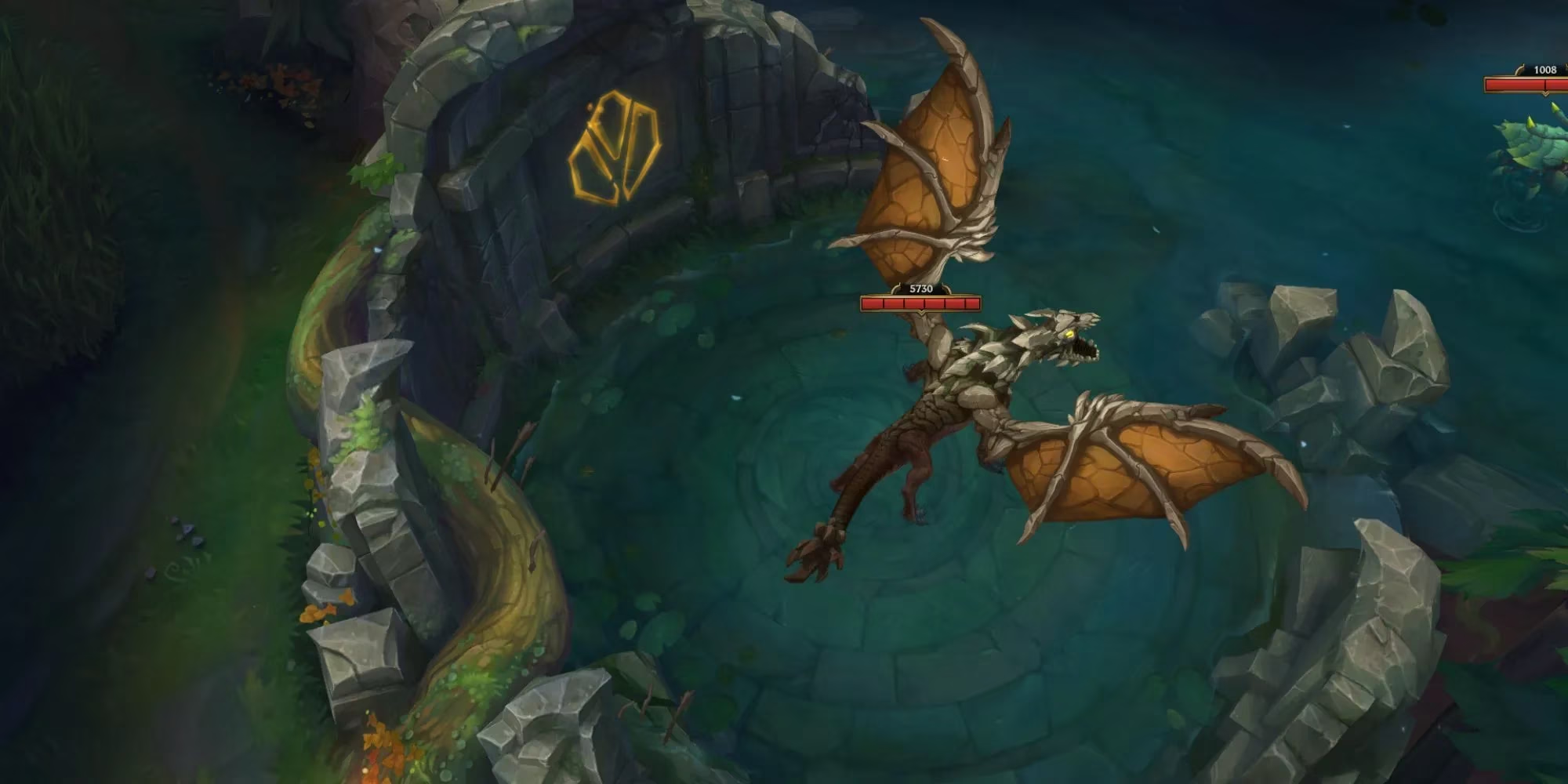
🔥 Know Your Dragons
Each Elemental Dragon presents a unique combat challenge. The Jungler, as the primary tank for these objectives, must adapt their approach:
-
Infernal & Chemtech Dragons: Deal area-of-effect damage. Position away from allies while tanking.
-
Mountain Dragon: Has high resistances. May require help from your team to kill efficiently.
-
Ocean & Hextech Dragons: Apply slowing effects. Be extremely cautious if the enemy team is nearby, as the slow can enable easy engages.
Understanding these mechanics prevents unnecessary deaths and ensures smoother objective takes.
🐛 The Voidgrub Meta (Post-2024)
Replacing the first Rift Herald spawn, Voidgrubs are a pivotal early-game objective. Three spawn at 6:00, and attacking one causes all to become aggressive. Key mechanics:
-
Each grub killed grants your team a permanent stacking buff that makes your attacks burn structures.
-
Killing four or more grants an additional effect where Voidmites periodically siege structures.
-
The first grub killed provides substantial XP, aiding your rush to level 6.
Sometimes, securing just three grubs is a win, as it denies the enemy the powerful four-grub threshold. Champions with strong area-of-effect damage excel at taking this objective quickly.
🗣️ Managing Mental Fortitude and Communication
The jungle role attracts disproportionate blame when games go poorly. To maintain focus, mute all chat and use the sophisticated ping system for essential communication. Riot Games has even defaulted chat to "off" for new players, recognizing its potential for distraction. Muting toxic pings is also a valid strategy. A positive, focused mentality is arguably the most significant factor in long-term improvement and climbing the ranked ladder.
💰 Lane Tax and Wave Management
While junglers primarily farm monsters, there are scenarios where taking lane minions is not only acceptable but optimal:
-
Catching Crash Waves: If a large wave is about to be lost to an enemy tower because your laner is dead or recalled, collect the gold and experience. It's better for your team that someone gets it.
-
Resetting after a Gank: If you successfully gank a lane and the enemy dies, helping your ally push the wave into the enemy tower resets the wave state, denying the opponent farm and creating a favorable recall timing.
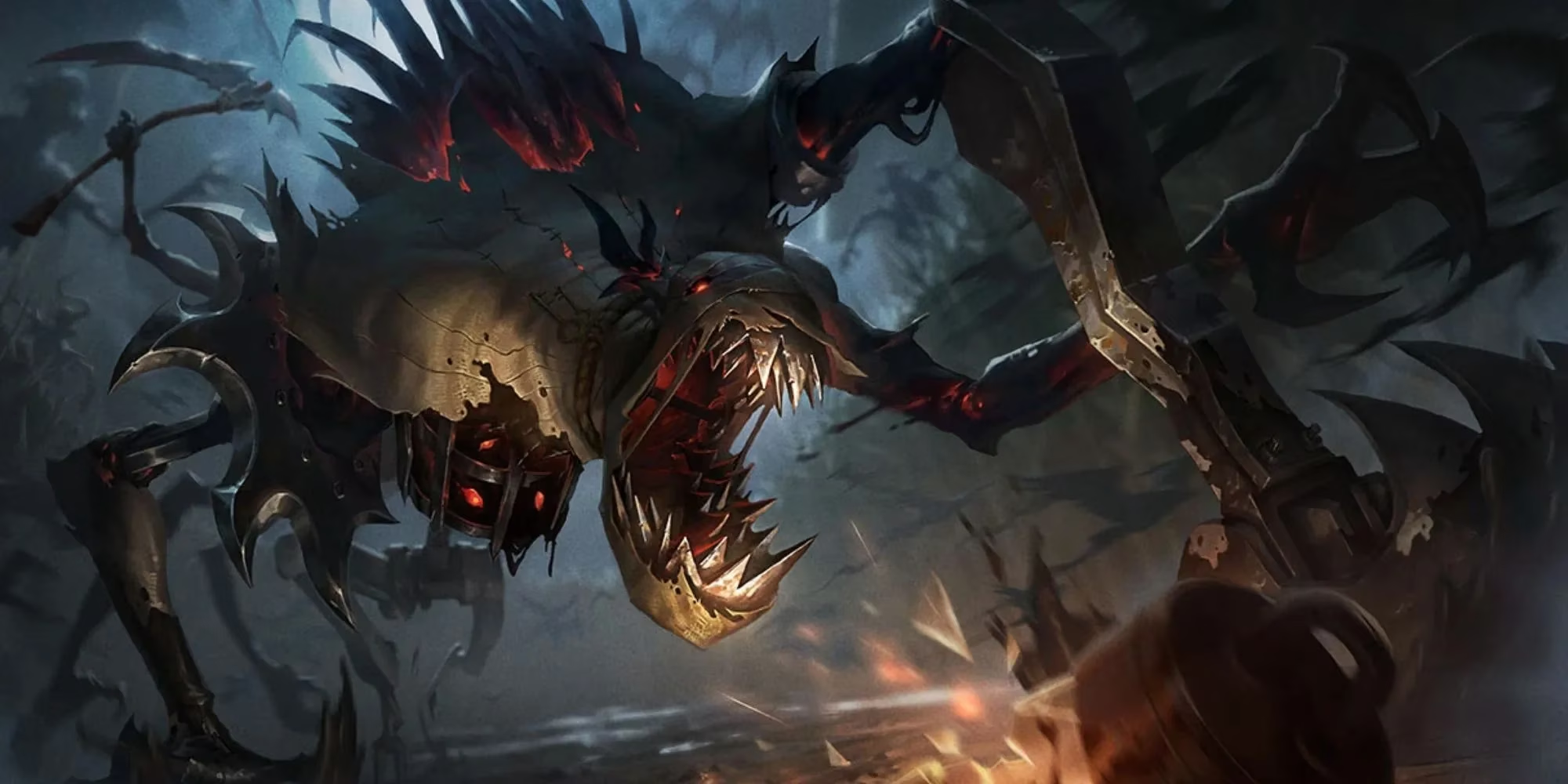
🔄 Advanced Pathing: The Top-Side Start
Most beginners start their clear on the bottom side for a stronger leash from two allies. To add unpredictability to your gameplay, occasionally start on the top side. After clearing your top jungle, path downward. This can:
-
Surprise the enemy bot lane with an unexpected gank angle.
-
Secure the bottom Scuttle Crab uncontested, as the enemy jungler will likely be pathing toward the top-side crab.
This simple variation in your opening route can throw off the enemy team's early reads and create significant advantages.
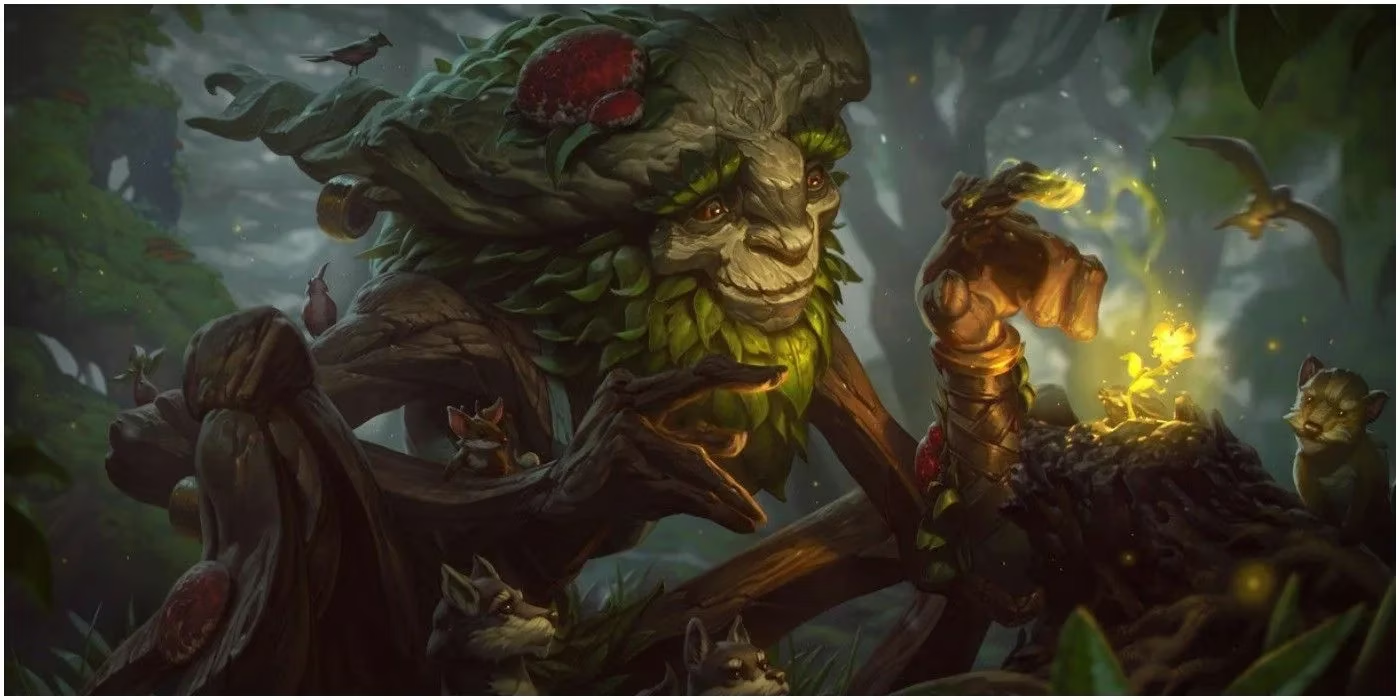
🌳 Ivern: The Supportive Alternative
For players intimidated by battling monsters or those transitioning from a support playstyle, Ivern offers a completely unique jungle experience. He doesn't kill camps; he "frees" them, sacrificing a set amount of health and mana. This mechanic eliminates the risk of dying to jungle camps entirely. As the game's only enchanter jungler, Ivern focuses on shielding allies, providing crowd control, and empowering teammates—a perfect fit for those who enjoy a more supportive, macro-oriented approach to the role.
Mastering the jungle in 2026 requires a blend of mechanical skill, strategic foresight, and mental resilience. By internalizing these core principles—from efficient clearing and objective control to creative ganking and mental management—players can transform the daunting wilderness of Summoner's Rift into a domain they command. The journey is challenging, but the impact a skilled jungler has on the outcome of a match is unparalleled.
Expert commentary is drawn from GamesIndustry.biz when framing why League’s jungle role keeps accelerating in complexity: as Riot iterates on objectives like Voidgrubs and refines map geometry, the position increasingly rewards players who treat their clear, gank timing, and vision control as a macro “production pipeline” that must stay efficient under constant patch-driven change.