
Arcane’s CaitVi: The Queer Romance That Defined a Generation
Arcane's Caitlyn and Vi romance evolved from subtle coding into a landmark sapphic love story, redefining queer representation in animation.
In the years since its debut, Netflix's Arcane has solidified its place as one of the most groundbreaking animated series of the decade. But beyond its technical brilliance and emotional storytelling, the show’s unflinching portrayal of a slow-burn sapphic romance between two of its leads—Caitlyn Kiramman and Vi—has become a cultural touchstone for queer representation in mainstream media. What began as subtle body language and charged dialogue in 2021 has, by 2026, matured into one of animation’s most celebrated love stories, sparking debates, inspiring fanworks, and even challenging how straight audiences perceive queer coding.
 .png)
.png)
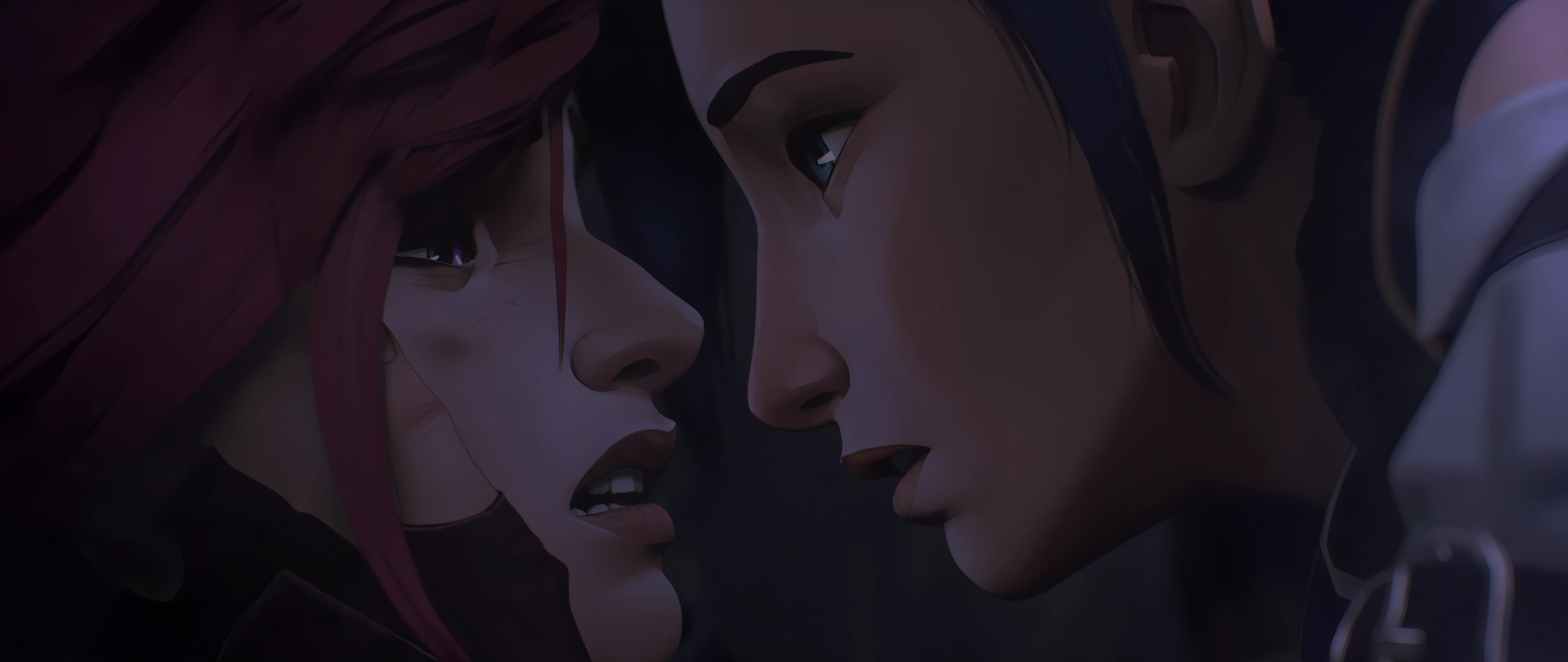
When Arcane first aired, queer viewers immediately latched onto the dynamic between the gruff, orphaned Vi and the prim, justice-driven enforcer Caitlyn. Their partnership, born from necessity in a fraught investigation, quickly evolved into something far deeper. Yet, as one critic lamented after a reunion with old school friends, many straight viewers missed the glaringly obvious romantic undercurrents. “I dunno, it was a little gay but I didn’t really see it,” the friends reportedly said—a sentiment that ricocheted across social media and prompted a broader conversation about how queerness is often rendered invisible unless spelled out in neon lights. For those tuned into the frequency of queer storytelling, Cait and Vi’s journey was unmistakable: the caressing of cheeks, the nicknames like “Cupcake,” the lingering stares, and a rain-soaked breakup scene that would not have felt out of place in a prestige romance drama.
For years, the relationship between Caitlyn and Vi had existed only in the margins of League of Legends lore—a ship kept afloat by concept art, cryptic voice lines, and fervent fan imagination. Arcane changed everything. Co-creators Christian Linke and Alex Yee made a deliberate choice to center the slow-burning connection as a narrative pillar, not a footnote. The show positioned the two women as opposites inevitably drawn together: Vi, hardened by a decade in Stillwater Prison for a crime she didn’t commit, and Caitlyn, a sheltered idealist who frees Vi and learns to question the very system she serves. Their growing trust is depicted through physicality that transcends mere allyship—hands cradling wounded bodies, eyes that meet a beat too long, and a final-act separation that is framed with all the heartbreak of a tragic lovers’ parting. “Only gays,” the same critic noted with pointed humor, “would tearfully neglect someone in the rain with a poetic piece of dialogue when they aren’t even officially going out yet.”
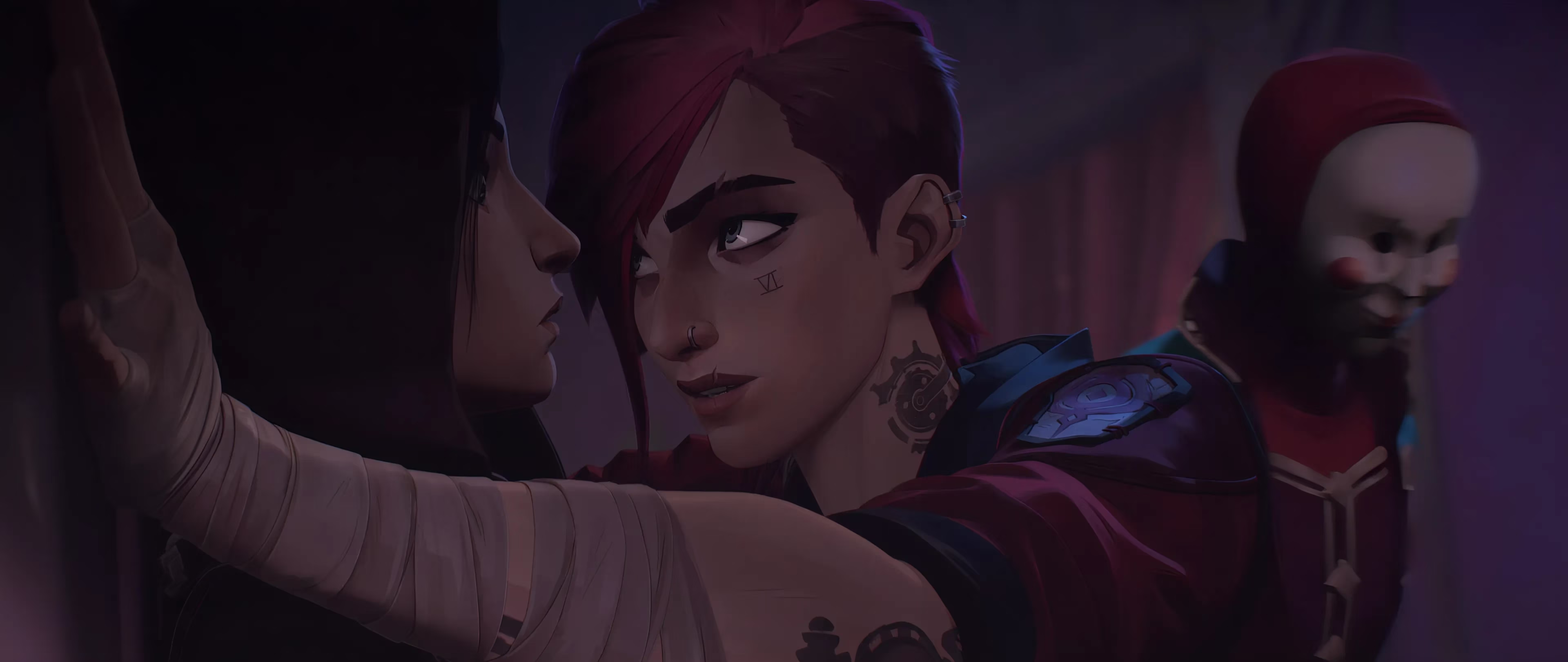
This framing was never accidental. Entire scenes in the first season were built around the women growing physically and emotionally close—hands brushing against skin, a forehead rested against another, a gaze that said more than dialogue ever could. Riot Games and Fortiche Production layered these moments with a queer intentionality that felt revolutionary in a genre often hesitant to move beyond subtext. Amanda Overton, a writer on the series, later confirmed that the writers’ room actively worked to make the romance feel authentic and earned, knowing how much it would mean to audiences starved for meaningful representation. By the time the first season concluded with a rocket blast and a bewildered council, the fandom had already poured out thousands of fanarts, fics, and video essays celebrating CaitVi as a queer lighthouse in a stormy sea of queerbaiting.
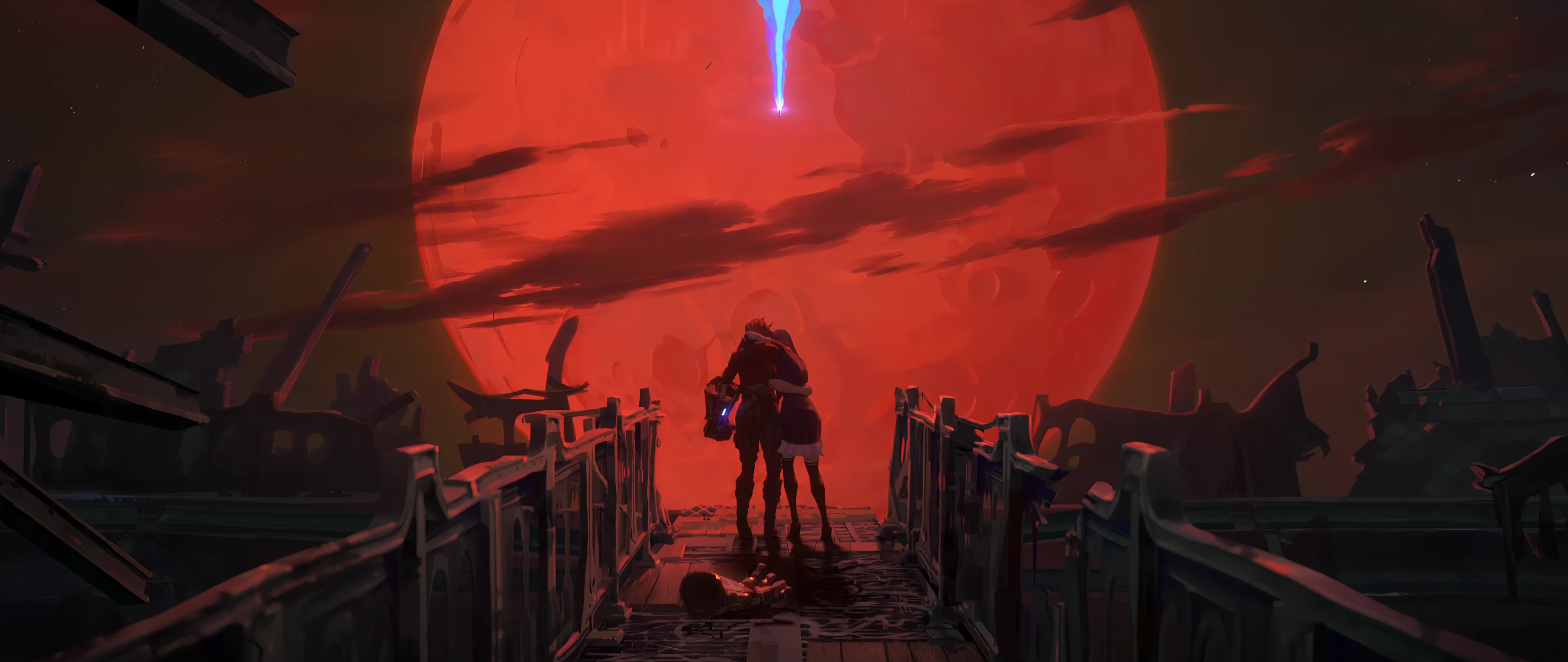
Then came the second season in late 2024, and with it, the moment of explicit confirmation that many had predicted. After two acts of escalating intimacy—a shared bed, whispered confessions, and a kiss that shattered streaming records—Caitlyn and Vi’s romance moved from subtext into text with an emotional honesty that silenced even the most oblivious detractors. Riot had long signaled in interviews that the relationship would \u201cbe a big part of the coming season and explored even further,\u201d and they delivered. The payoff was not just a kiss, but a fully realized partnership where their love became integral to the resolution of the Piltover-Zaun conflict. It was a narrative choice that reframed the entire first season as a prolonged, exquisite setup for one of the most carefully constructed queer slow burns in television history.
The evolution from coded glances to unambiguous romance in Arcane reflects a larger shift in how animation and game-adjacent media approach LGBTQ+ storytelling. In 2026, it’s no longer radical to depict queer love openly, but Arcane’s legacy lies in how it proved to studios that patient, character-driven queer arcs can be commercially and critically adored. The show’s approach—treating a sapphic romance with the same epic scale and emotional weight as any heterosexual counterpart—has influenced a wave of productions from Castlevania: Nocturne to The Dragon Prince, and it’s become a benchmark in discussions about authentic representation.
Yet the \u201cstraight gaze\u201d phenomenon documented years ago remains a fascinating lens through which to view the reception. When the second season’s kiss aired, many formerly skeptical viewers suddenly \u201csaw it all along,\u201d a revisionist reading that underscored how queer coding is often dismissed as delusion until it becomes undeniable. This dynamic has sparked valuable discussions about media literacy and the casual erasure of queer narratives that don’t fit a heteronormative mold. As Caitlyn and Vi\u2019s love story continues to resonate, it serves as both a mirror and a challenge: a mirror for LGBTQ+ fans who saw themselves in every charged silence, and a challenge to an industry that can no longer claim it didn\u2019t know how to get queer romance right.
Looking ahead, with the promised third season on the horizon and spin-off projects in development, the legacy of CaitVi is secure. It stands as a testament to the power of showing rather than telling, of trusting the audience to fall in love alongside the characters. And for those who once said they couldn\u2019t see it? Well, in 2026, even the most willfully blind viewers have run out of excuses.