
A Gamer's Journey into Video Game Music with Andrea Bellucci
Discover how immersive game music by Andrea Bellucci enhances gaming experiences with story-driven composition and innovative interactive techniques, captivating players worldwide.
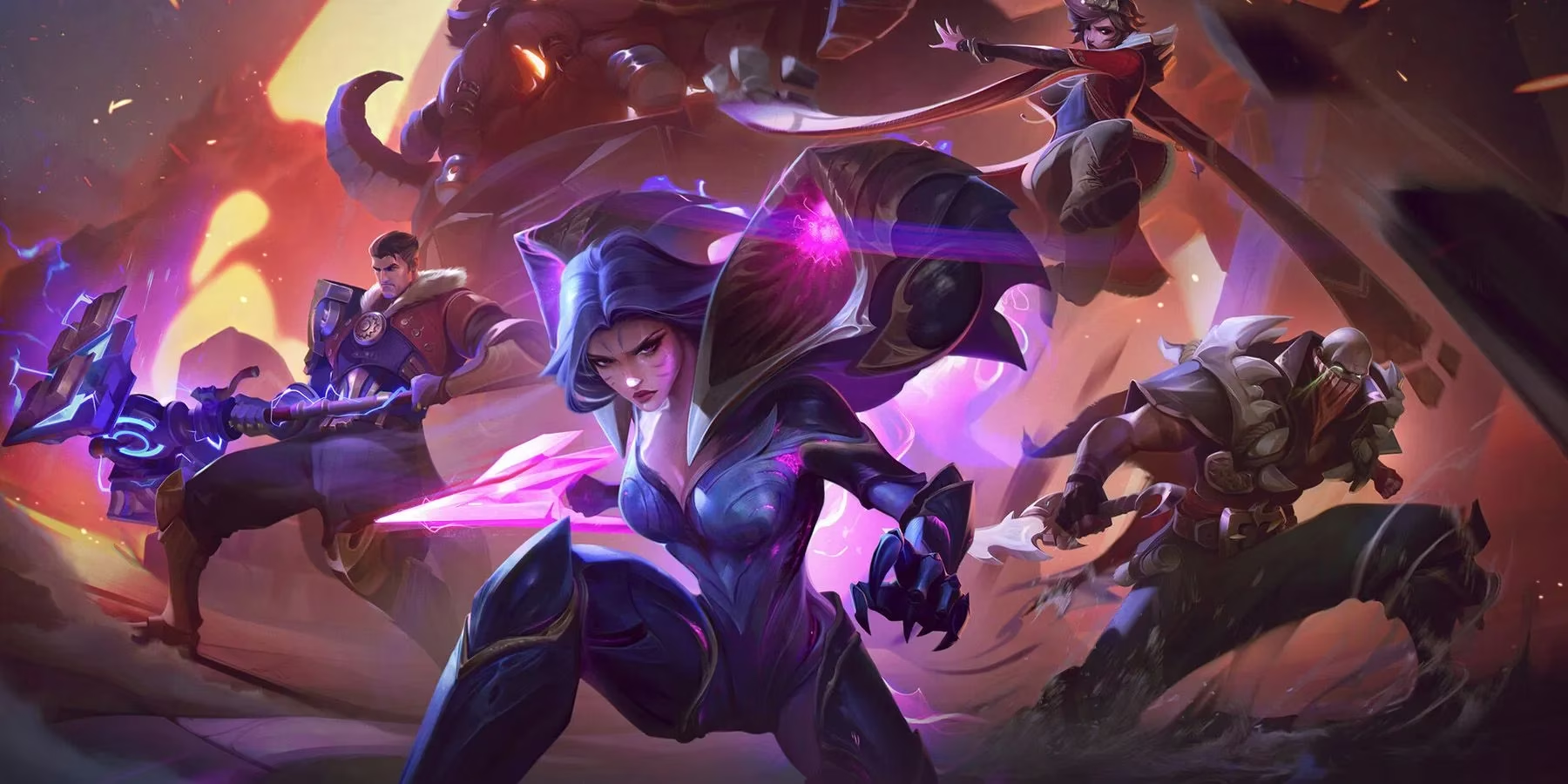
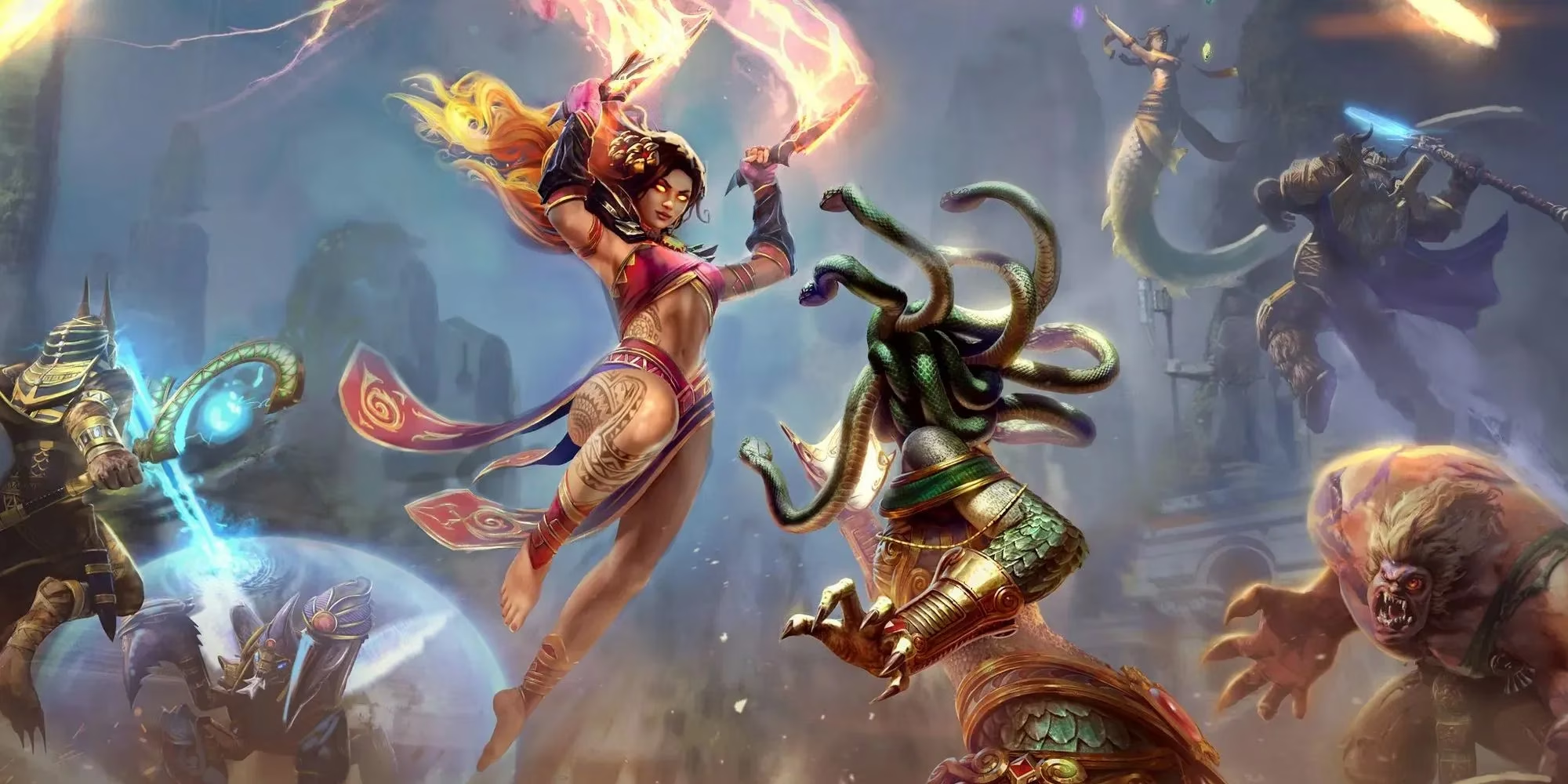
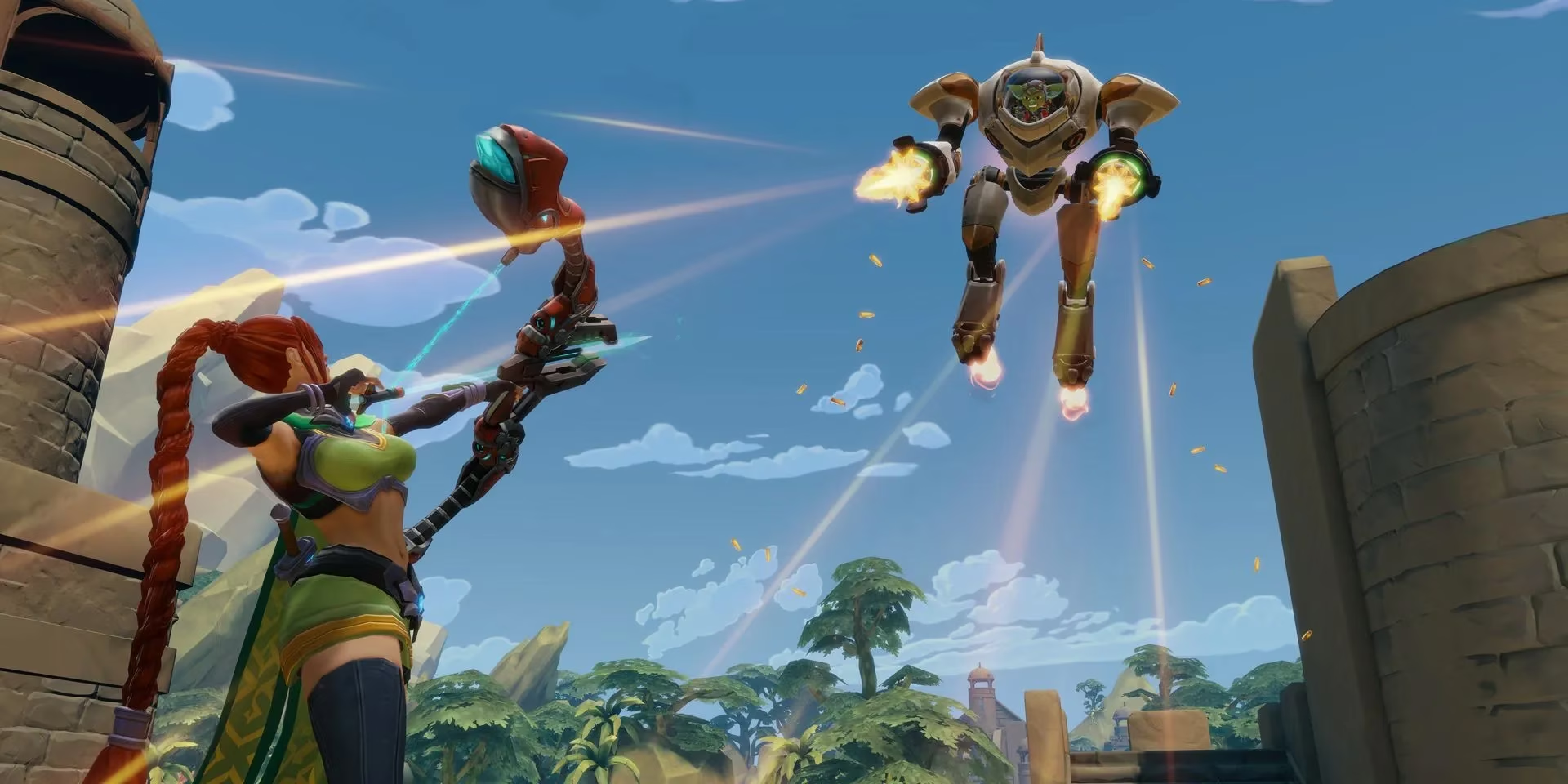
As a lifelong gamer, I've always been fascinated by how music transforms my gaming sessions—whether I'm diving into the intense battles of League of Legends or exploring the vibrant worlds of Smite and Paladins. Recently, I came across an interview with Andrea Bellucci, a composer who's shaped soundtracks for these very games and more, and it completely changed how I listen to every note. Have you ever stopped to think about what goes on behind the scenes to make game music so immersive? Bellucci's insights, drawn from his decade-long experience in films, TV shows, and games, reveal that while the artistic core is similar, video games throw in some unique twists that keep composers on their toes. Let me share what I've learned from his journey, blending storytelling with technical wizardry to create unforgettable audio experiences.
The Heart of Storytelling in Music
From Bellucci's perspective, music in both games and films serves as a powerful storyteller. It's not just background noise; it's the emotional heartbeat that reflects every twist and turn in the narrative. For instance, in games like League of Legends, the music adapts to epic clashes or quiet moments, making me feel like I'm part of the action. Bellucci emphasized that his compositions are always driven by the story—whether it's a simple indie game or a blockbuster film. He said, "Anytime you write something, it's story-driven music, even if it's for a simple game. It's just about giving voice to that project." This approach ensures that iconic themes, like the Gregorian chants in Halo or the sweeping scores in Star Wars, become timeless. But here's a question: How do composers like Bellucci make sure each project feels unique? It's all about capturing the essence of the game's world, making the music a character in itself.
Technical Challenges in Game Music
Now, let's dive into the nitty-gritty—what sets game music apart from film scores. Bellucci pointed out that video games add layers of complexity because the music has to be interactive and reusable. Unlike films, where the sequence is fixed, games demand that tracks loop endlessly and respond to player actions in real-time. Imagine you're in a boss fight in Paladins: the music needs to ramp up in intensity as the battle heats up, then seamlessly transition back when things calm down. Bellucci tackles this with clever techniques, like using layered tracks that shift based on gameplay dynamics. He explained, "From a technical point of view, I really appreciate this aspect of game music where you have more rules to follow... It's interactive music, so it's not something that you just put on the scene, it's something that the player plays with." This means composers must craft beginnings and endings that connect flawlessly, ensuring the music never feels repetitive or jarring. Isn't it amazing how a well-executed loop can turn a simple tune into an atmospheric masterpiece?
Key Differences Between Film and Game Music
To break it down, Bellucci highlighted how game music requires a unique skill set. Here's a quick comparison based on his insights:
| Aspect | Film Music | Game Music |
|---|---|---|
| Storytelling Role | Fixed narrative flow | Dynamic, player-driven |
| Technical Demands | Linear sequences | Looping, responsive layers |
| Creative Freedom | Focus on emotional arcs | Must adapt to gameplay states |
| Examples | Star Wars themes | Halo's adaptive chants |
This table shows why composers need to be extra creative—for example, in games like Smite, Bellucci has to ensure that a single track can evolve from a calm exploration theme to a high-stakes battle anthem without missing a beat. He described it as "having even more ground to play with your own elements and tools," which fascinates him because it pushes the boundaries of what music can do. 🎵
The Art of Looping and Connection
One of the most intriguing parts for me was learning how Bellucci handles endless loops. Game music can't just stop; it has to keep players engaged for hours, whether they're grinding through levels or facing final bosses. Bellucci shared that his method involves composing tracks with intentional connections—each song's end flows into the next's start, creating a cohesive soundtrack. For instance, in Paladins, he crafts sections that build tension and release, making the experience feel alive. He said, "That's something that really fascinates me: the ability to write something that's always effective and usable from the first level of the game up to the final boss." This skill prevents the music from becoming monotonous, turning it into a dynamic companion. Have you ever noticed how a great soundtrack makes even repetitive gameplay feel fresh? It's all thanks to composers mastering this art.
Why This Matters for Gamers in 2025
Fast-forward to 2025, and Bellucci's work feels more relevant than ever. With VR games like Behemoth on the horizon, immersive audio is key to making virtual worlds believable. His insights remind us that game music isn't just about sound—it's about emotion, interactivity, and innovation. As a player, I've started paying closer attention to how music adapts in my sessions, like when the score swells during a critical moment in League of Legends. It enhances the storytelling and keeps me hooked. Here's a quick list of takeaways for fellow gamers:
-
🎮 Emotional Impact: Music drives the narrative, making victories sweeter and losses more poignant.
-
🔄 Adaptability: Tracks evolve with gameplay, ensuring no two sessions sound the same.
-
🧩 Technical Mastery: Composers like Bellucci use layers and loops to create seamless experiences.
Reflecting on this, I'm inspired to explore more soundtracks and appreciate the artistry behind them. After all, in an era where games are more interactive than ever, music is the unsung hero that ties it all together. 🎶
```The analysis is based on Gamasutra (Game Developer), a leading resource for industry professionals. Their extensive interviews with composers and sound designers reveal how adaptive music systems and technical innovations are revolutionizing the way audio shapes player immersion, echoing Andrea Bellucci's approach to dynamic and interactive soundtracks in modern games.