
2026 Video Game Industry Outlook: Building on Lessons from a Turbulent Past
The video game industry's trajectory from the early 2020s to 2026 reveals a crucial pivot from inconsistent releases and player disappointment to a market demanding polished, high-quality games. This evolution, shaped by past failures, now emphasizes blockbuster spectacle alongside flawless execution.
As the video game industry moves through 2026, reflecting on the trajectory from the early 2020s provides crucial context for the current landscape. The years following the global pandemic presented a complex picture of delayed promises, inconsistent quality, and evolving player expectations. Industry observers and players alike entered the middle of the decade with cautious optimism, having witnessed a cycle where anticipated 'bumper crop' years often gave way to further postponements and titles that failed to meet their potential. The current environment is one shaped by those experiences, with developers and publishers now operating in a market that demands both blockbuster spectacle and polished execution.
The Legacy of Early 2020s Inconsistency
The period from 2021 to 2023 established a new pattern for major releases. While 2021 was characterized by its consistency—delivering a steady stream of well-received titles like Resident Evil Village, It Takes Two, and Metroid Dread—it lacked the seismic, genre-defining hits of previous eras. The subsequent year, 2022, became a tale of extreme highs and profound lows. It delivered prestige titles of immense scale and critical acclaim, yet simultaneously suffered from high-profile releases that were criticized for being technically flawed or creatively hollow. This dichotomy created a polarized experience for consumers.
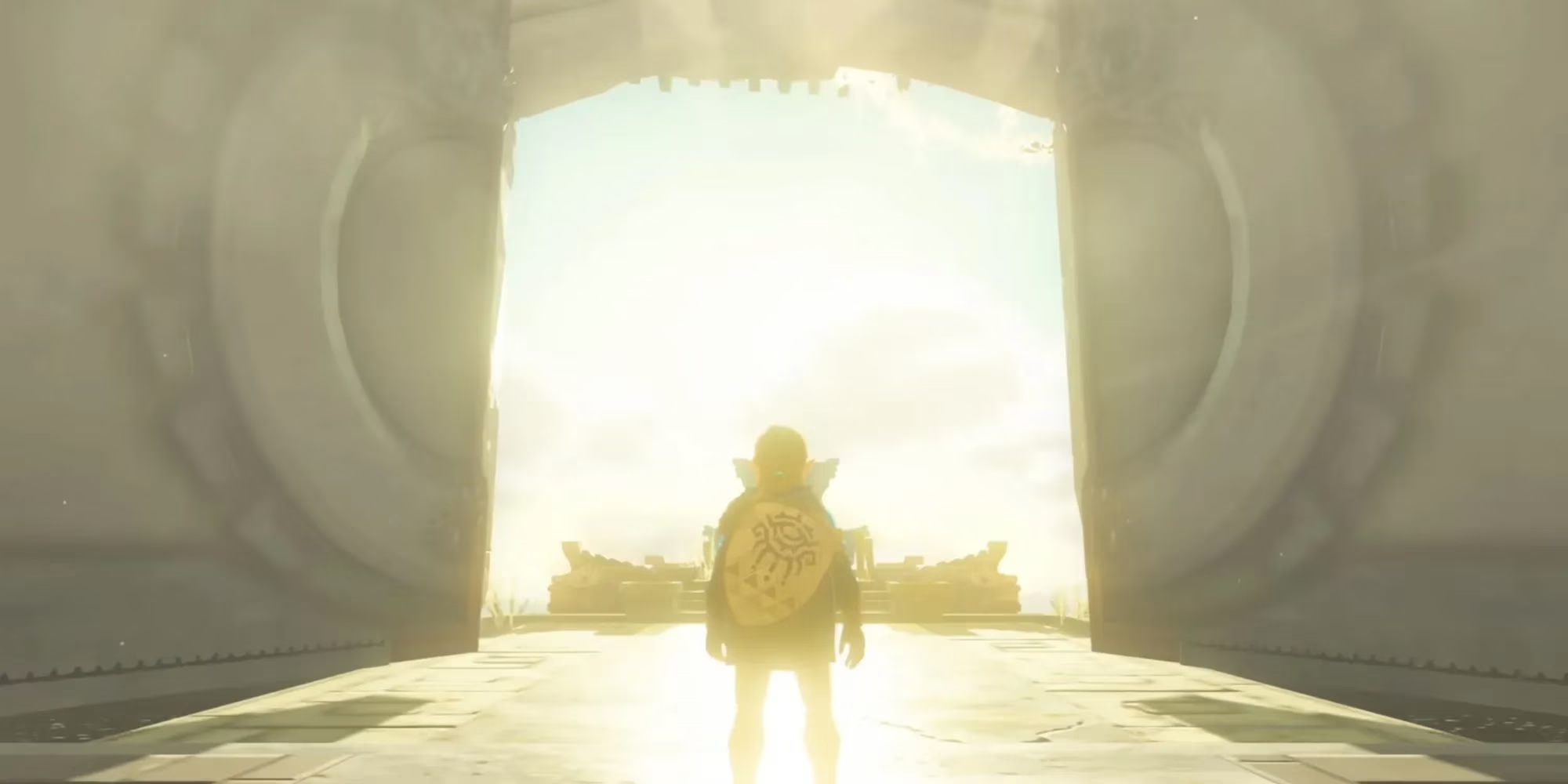
The highs of that era were indeed stratospheric. Titles like Elden Ring redefined open-world design and achieved a level of prestige that few games ever reach. Other major franchise entries pushed technical boundaries and narrative ambition. However, the contrast was sharp. The lows were marked by releases that felt incomplete, rushed, or failed to innovate upon their predecessors. This included entries in beloved series that were criticized for lacking content, suffering from performance issues, or relying on monetization strategies that compromised the core experience. The result was a year perceived as 'all risk, no reward' for many players, where anticipation was frequently met with disappointment.
The Pivot and Promise of the Mid-2020s
By 2023, the industry began its corrective pivot. The lessons of the previous years were hard-learned: players' tolerance for broken launches had diminished, and the value of a polished, complete experience at release had skyrocketed. The lineup for that year was packed with ambitious sequels and new intellectual properties, representing a collective effort by publishers to deliver on long-awaited promises. While some delays inevitably occurred, the overall output demonstrated a renewed focus on quality assurance and meeting heightened consumer expectations.

This shift set the stage for the current state of the industry in 2026. The market now operates with several key understandings:
-
Polish is Paramount: A game's technical performance at launch is now a significant factor in its critical and commercial success.
-
Content Depth Matters: Players expect substantial, meaningful content that justifies both the price tag and the time investment, moving beyond repetitive live-service loops.
-
Innovation Within Legacy: While blockbuster sequels dominate, they are now expected to offer meaningful evolution rather than iterative rehashes.
The 2026 Landscape: A Synthesis of Scale and Stability
Looking at the release calendar and development trends for 2026, the industry appears to have synthesized the consistency of 2021 with the high ambition of 2022. The current year is not defined by a single overwhelming wave of titles, but by a sustained, high-quality pipeline across all tiers of production.
Major Tentpole Releases continue to drive headlines, with several long-in-development projects from premier studios finally seeing the light of day. These games carry the weight of massive budgets and fan expectations, but now typically benefit from longer, more transparent development cycles that aim to avoid the pitfalls of past rushed launches.
The "Double-A Plus" Space has flourished. This crucial tier, which sits between massive indie darlings and hundred-million-dollar productions, has become the industry's backbone. These titles often take creative risks that larger studios cannot, delivering unique narratives, inventive gameplay mechanics, and polished experiences that frequently become critical darlings and commercial successes. They provide consistent quality throughout the year, ensuring there is always a noteworthy game to play.
The Indie Scene remains as vital as ever, continuously innovating and often setting trends that larger studios later adopt. Digital storefronts and subscription services have made these games more accessible than ever, allowing them to find audiences and achieve success on their own terms.
Key Trends Defining the 2026 Experience
Several observable trends have crystallized from the experiences of the earlier part of the decade:
| Trend | Description | Industry Impact |
|---|---|---|
| Polished Launches | A strong focus on technical stability and content completeness at release. | Reduced day-one patches, stronger review scores, and higher player retention. |
| Hybrid Business Models | A move away from purely premium or free-to-play, towards balanced models with fair monetization. | Less player backlash, more sustainable long-term support for games. |
| Cross-Platform Play & Progression | Becoming a standard expectation for multiplayer and live-service titles. | Larger, healthier player ecosystems and reduced fragmentation. |
| Narrative Ambition | Even action-focused blockbusters now invest heavily in character-driven stories. | Deeper player engagement and emotional investment in franchises. |
Conclusion: A Maturing Industry
The video game industry in 2026 stands as a more mature and responsive ecosystem than it was at the start of the decade. The turbulent years of delays, mismatched expectations, and technical missteps served as a difficult but necessary period of adjustment. Today, the relationship between developer ambition and practical execution is more balanced. Players can reasonably expect major titles to deliver on their promises at launch, while also enjoying a rich and constant stream of innovative experiences from smaller teams.
While the cycle of hype and anticipation will always exist, the collective memory of past disappointments has fostered a healthier skepticism and a higher standard. The expensive hardware in living rooms is finally being justified not just by a handful of spectacular titles, but by a consistent, high-quality library that offers something for every type of player. The industry has moved beyond hoping for a single 'great year' and has built the foundation for a great era.